



Daniel and I had no plans to go to São Paulo. Someone had described Rio de Janeiro as heaven and São Paulo as hell, and we obviously took this binary judgement as the definitive truth on the matter. Besides, there were so many other places to go in Brazil: We were glad to take possibilities off our list.
But then an Argentinian director in Rio said that São Paulo was, of course, the heart of Brazil’s art world, and an U.S.-Brazilian sibling quartet convinced us that São Paulo was just as delightful a city as Rio—just a lot less touristic.
Readers, we got curious.
When I discovered that a flight from São Paulo to Foz do Iguaçu from where we planned to leave Brazil (and enter Argentina) happened to be far cheaper than a flight from Rio, we swiftly changed our travel plans. We made the journey from Ilha Grande on boat and bus via Paraty to arrive in São Paulo by mid-November 2025.
We were not disappointed.
Please come with us today on a walk through a city that deserves more love.
—> If you’re reading this as an email, your program will likely cut it short—too many photos. To enjoy the full essay, please find that link at the bottom that says “View entire message” and open the email online.
—> If you don’t want to read this newsletter, but would like to keep up with our personal news, please scroll down to the last section, “Time to Say Goodbye,” where I often share our travel plans, whereabouts, and more.
—> Feeling déjà vu? Our last collaborative essay was Faces and Places of Seoul.
Faces and Places of São Paulo, Brazil
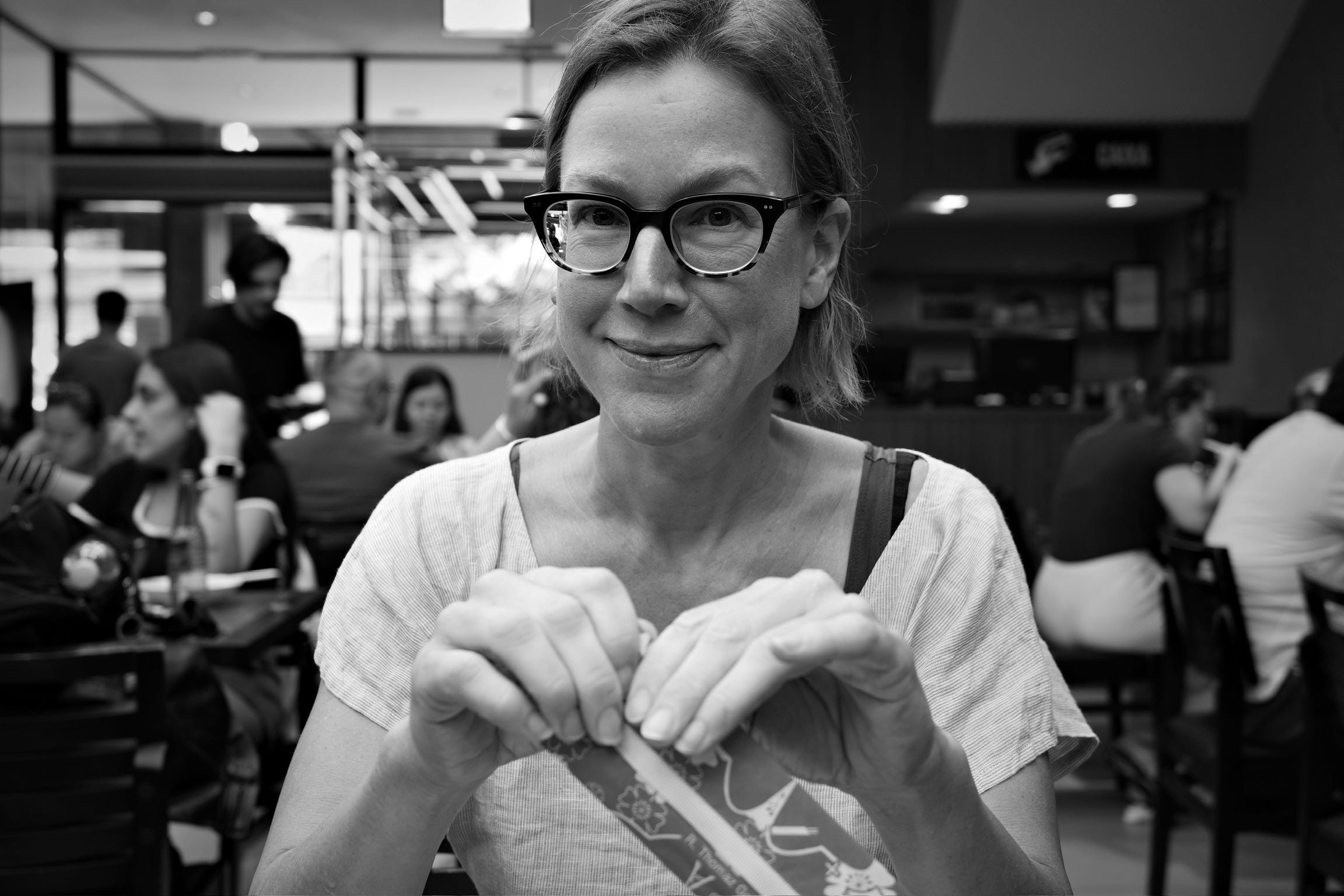
On our first day in the city, we visited Liberdade, the neighborhood known as Japantown. It was a Sunday, so the popular weekend market was on, and the crowds were daunting. But once we got away from the greasy food stalls, it was an interesting walk around the old streets. We admired graffiti and buildings, ate sushi, and looked at people. All sorts of people.



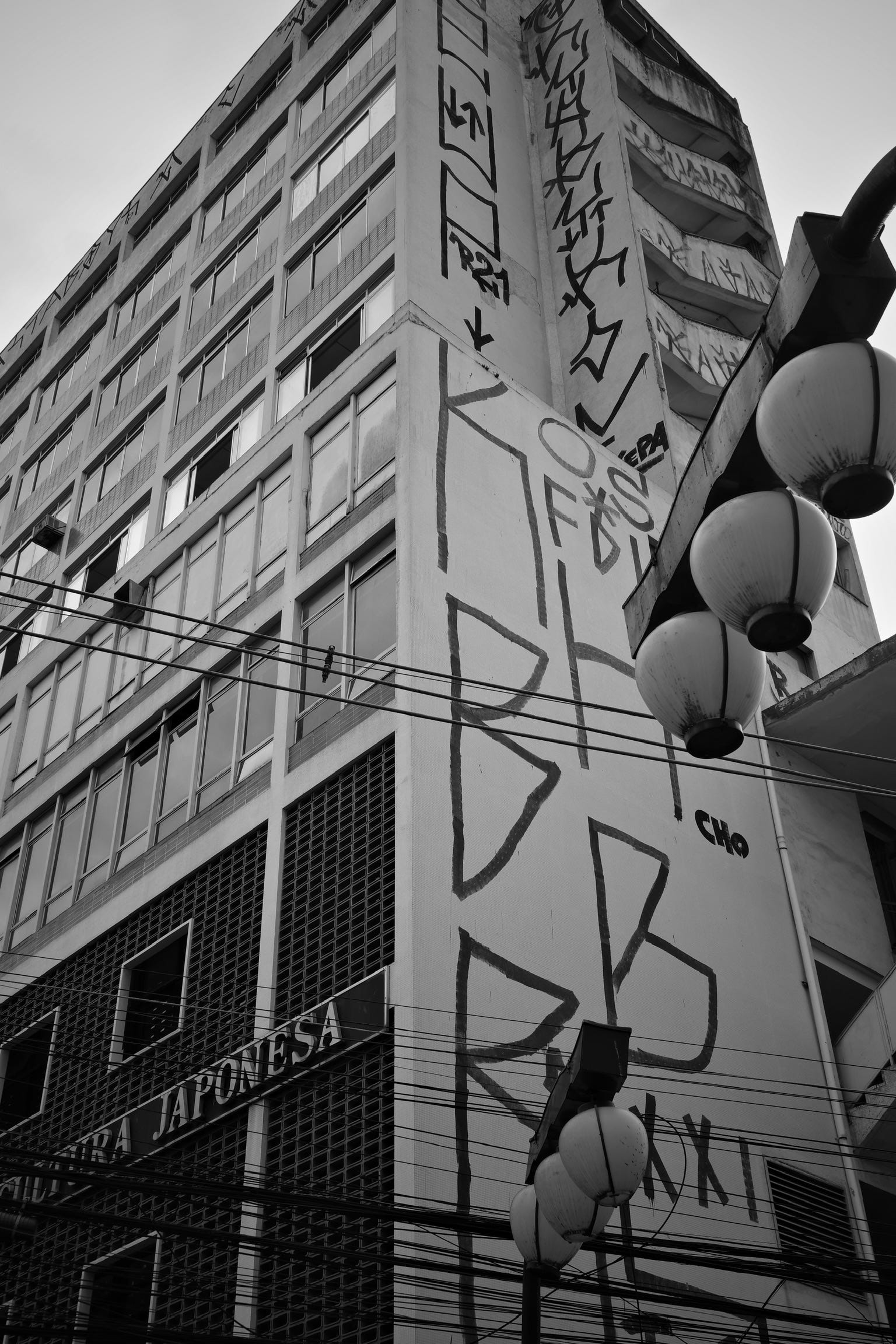

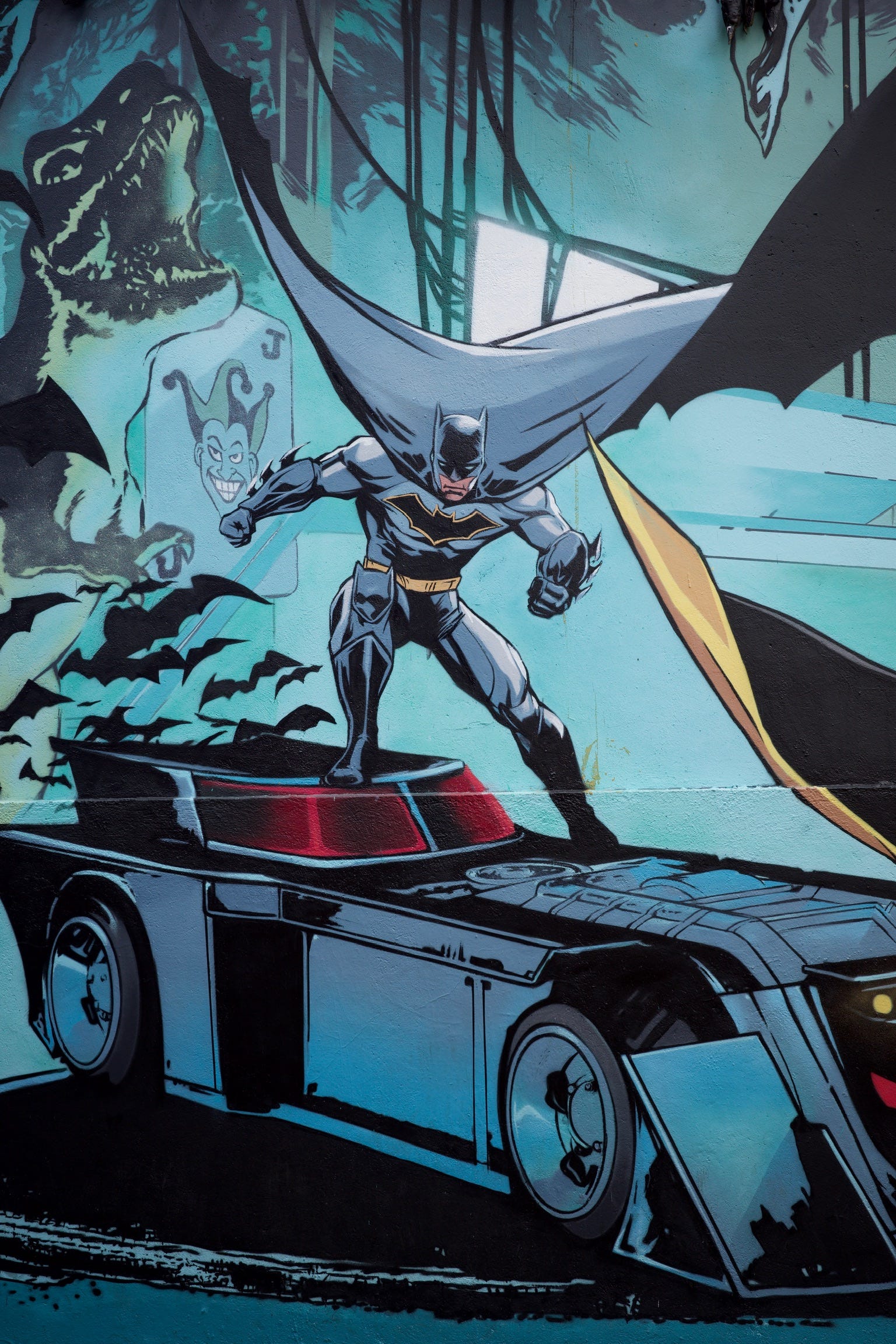
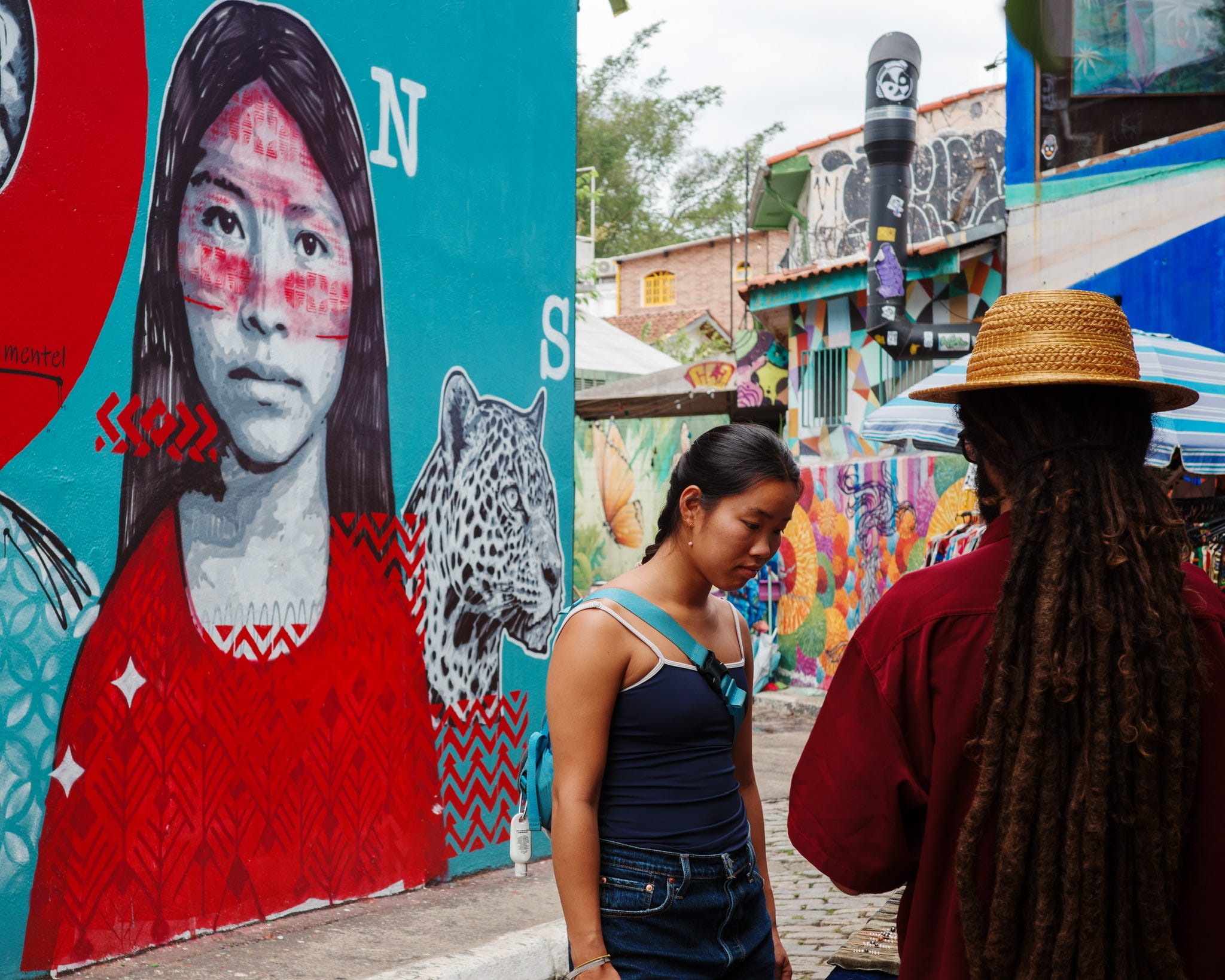
The next day, we checked out Beco de Batman, an area famed for its graffiti and named after a rendering of Batman from the 1980s. I’m sure the place was very cool once, but it has since become overly touristic, with vendors selling cheap jewelry and trinkets. The art work on the walls still merits a visit, but you can find truly great graffiti everywhere in São Paulo.


With our appetite for art whetted, we headed to the Museum of Art of São Paulo Assis Chateaubriand. We were in luck—it was some type of free culture day—and we walked straight in.
The collection is impressive as it is, but what I truly enjoyed was how this museum displayed the art works. Let me show you:
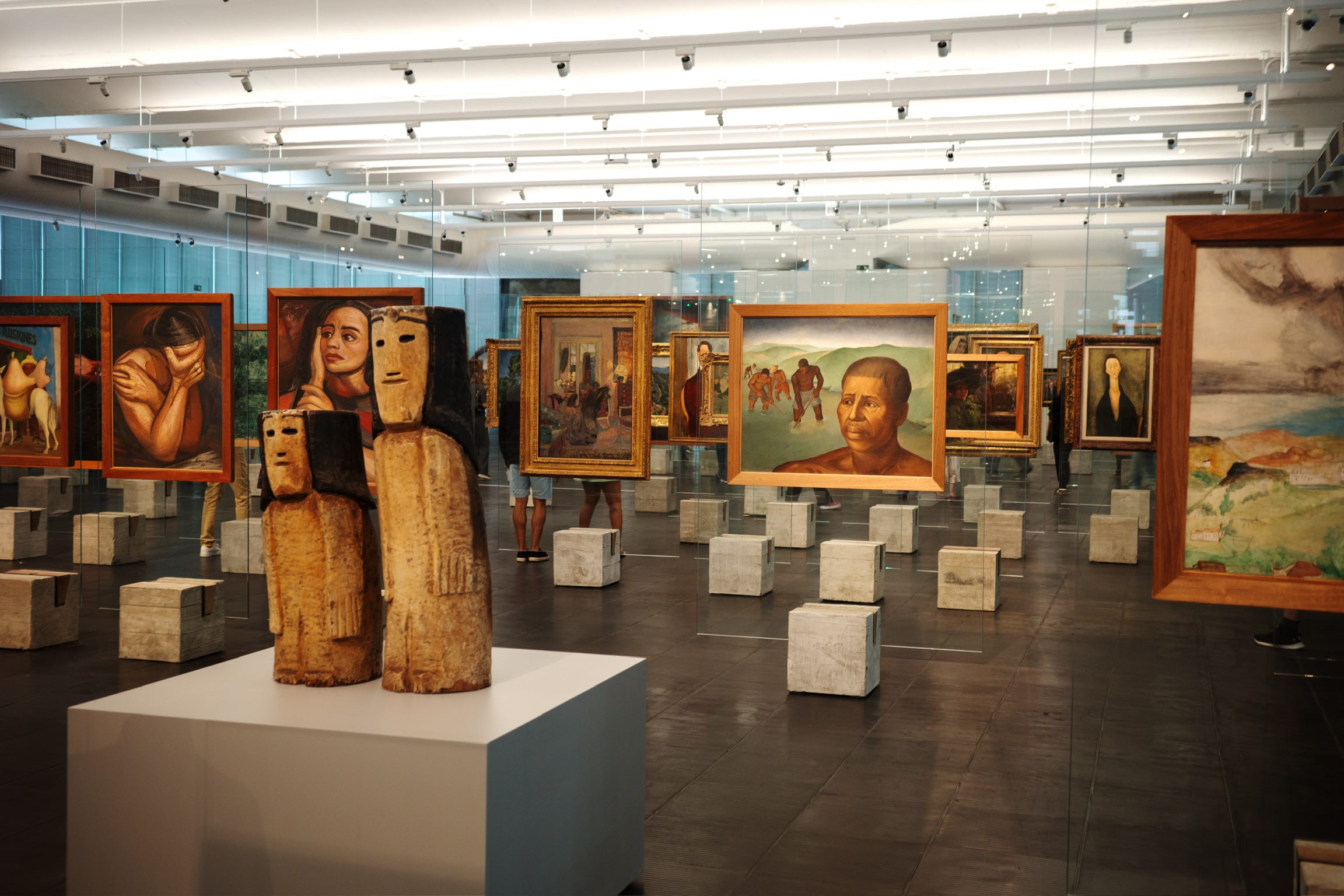
My first impression: too many paintings in one room—what are they doing to me?
My second impression: this is brilliant!
Hanging the paintings from the ceiling gives us visitors the possibility to encounter the art works without any preamble. No artist names, no movements mentioned, not even a year of creation to orient us. All information is displayed on the back, where we can read it after we’ve spent time alone with the work.
Before we discover how famous the painting is and how much authority it has, we get to ask ourselves: What is this art telling me? And: What is my response?
The paintings also become more real, more 3-D, when we can encircle them, and the route through the large open space is more intuitive. We go where our attention goes and not where a curator sends us.


“Long looking at paintings is equivalent to being dropped into a foreign city, where gradually, out of desire and despair, a few key words, then a little syntax make a clearing in the silence. Art, all art, not just painting, is a foreign city, and we deceive ourselves when we think it familiar. No-one is surprised to find that a foreign city follows its own customs and speaks its own language.” Jeanette Winterson in her beautiful collection Art Objects: Essays on Ecstasy and Effrontery.
For sunset, Daniel and I walked up and down the Avenida Paulista, which was like an entire city on its own.
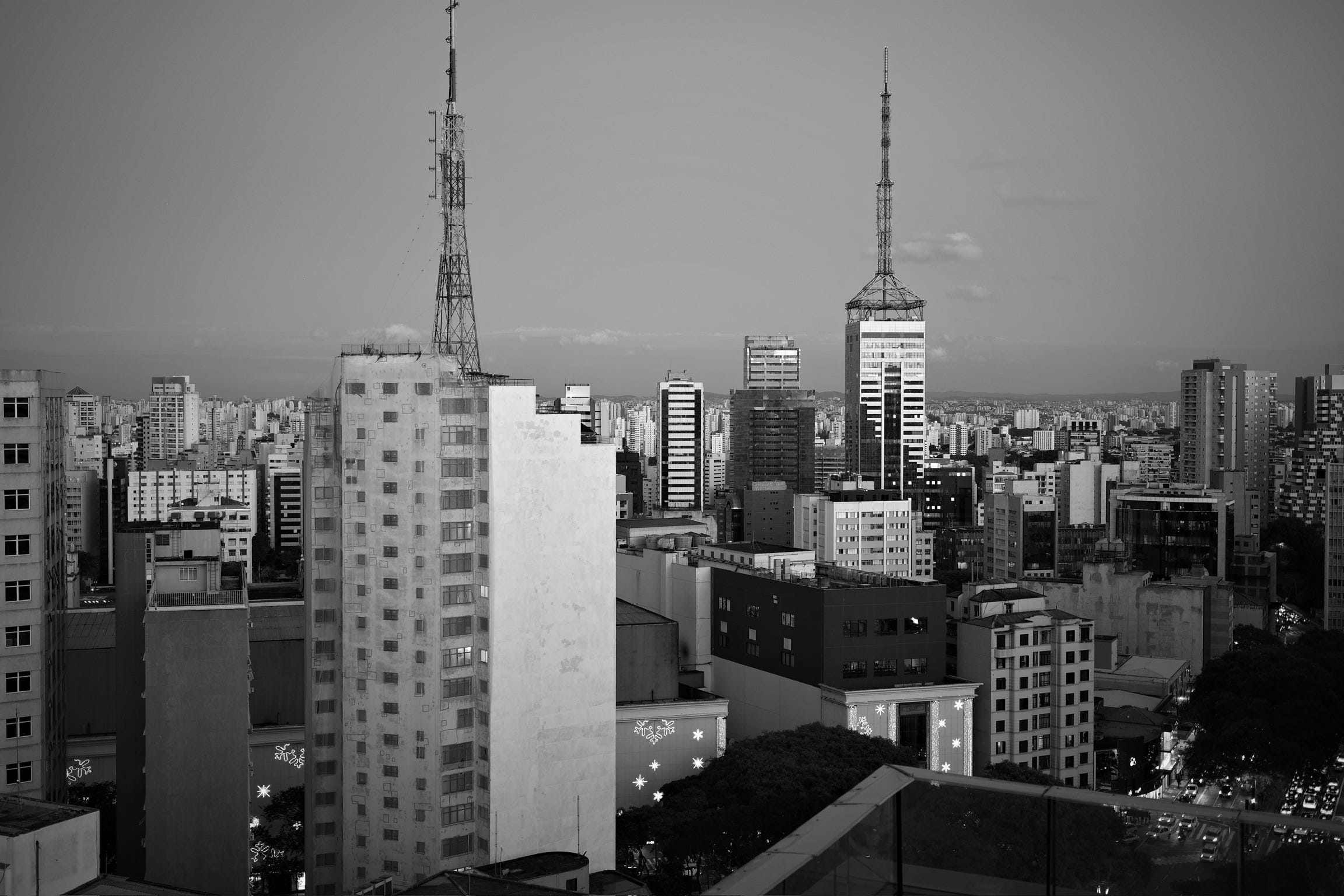
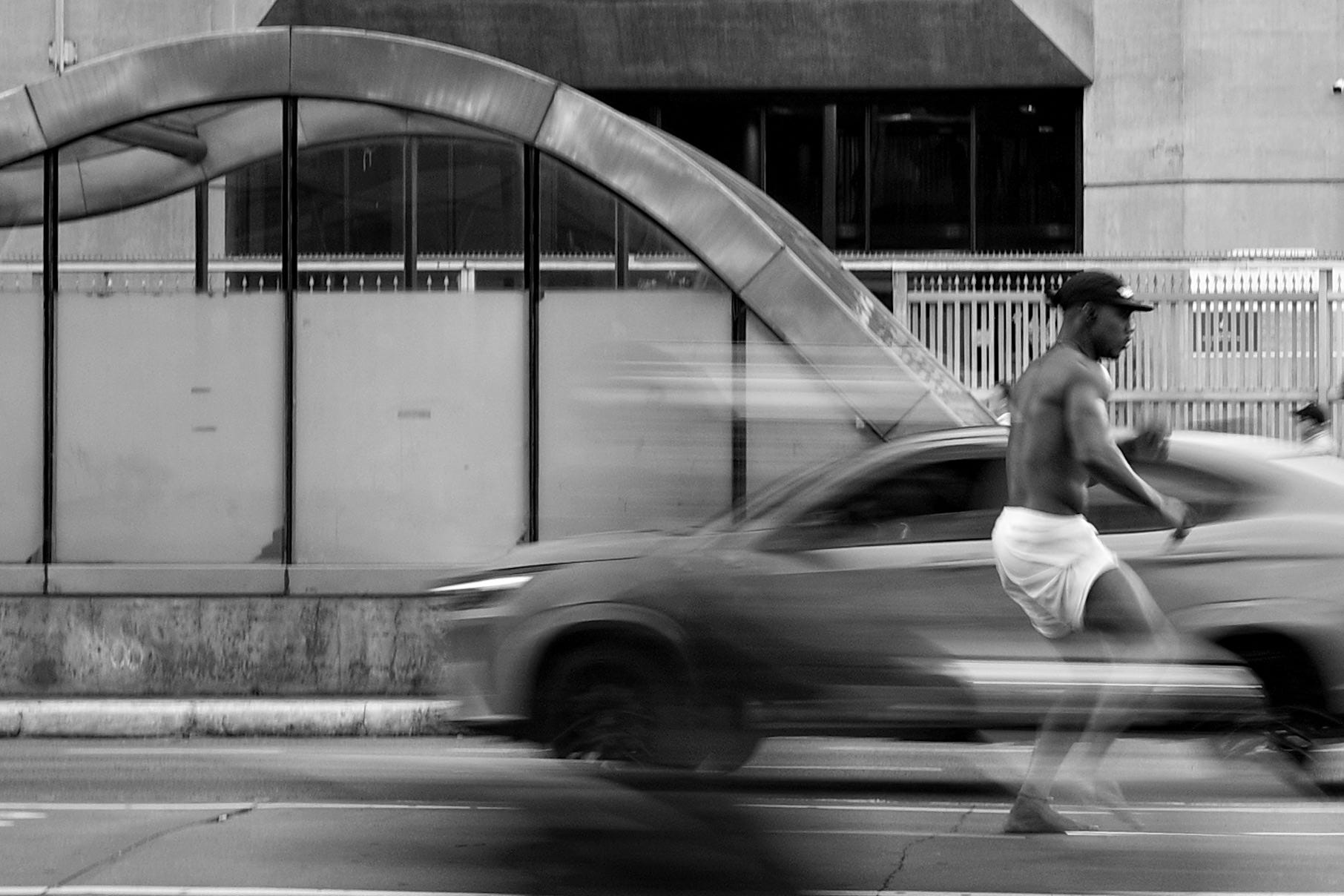
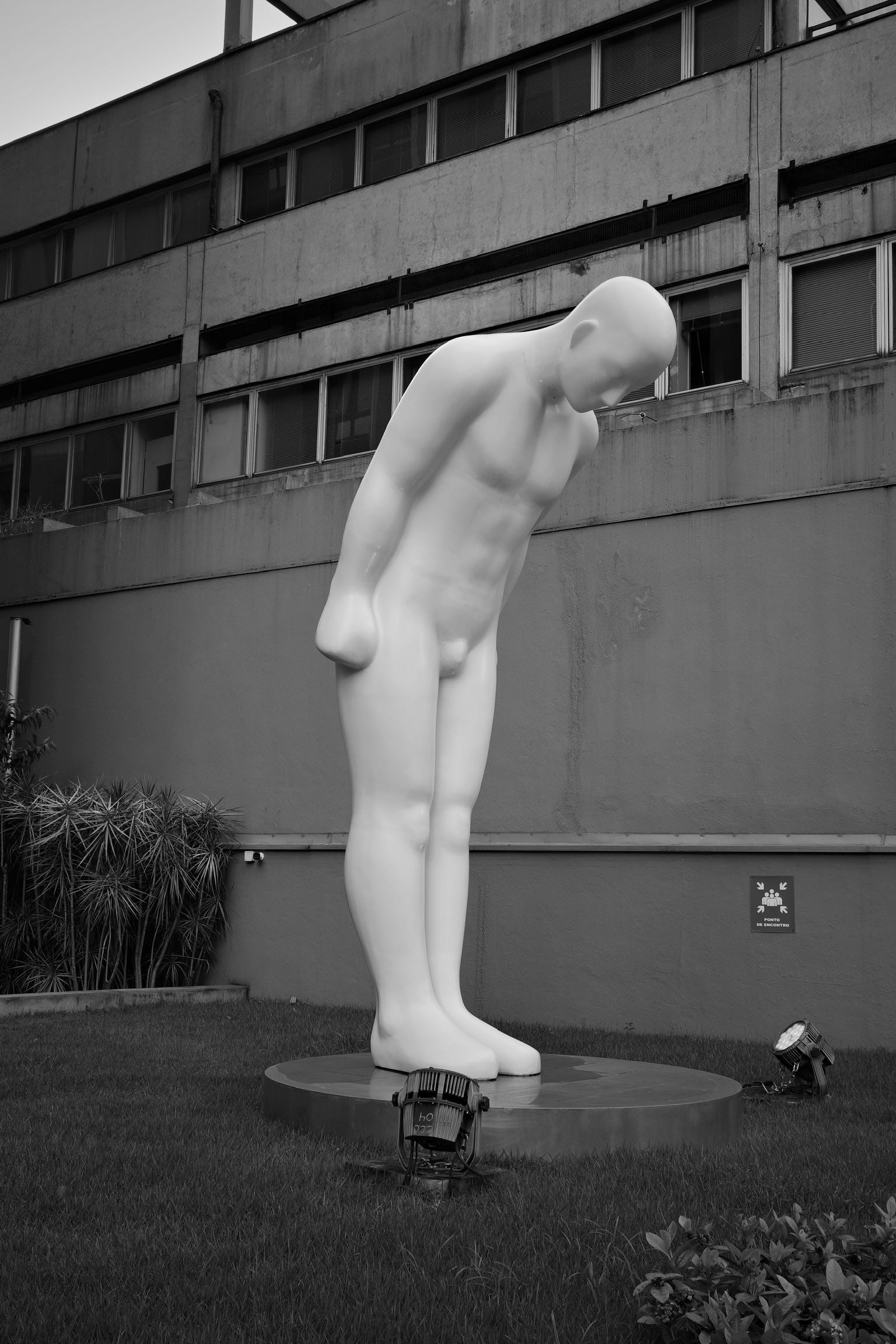
More art followed the next day when we visited Ibirapuera Park to see the buildings from architect Oscar Niemeyer.
Little did we know that we could enter the Bienal de São Paulo Pavilion for free and be totally wowed. The building, the exposition, the staff, the visitors…
We spent many hours here.


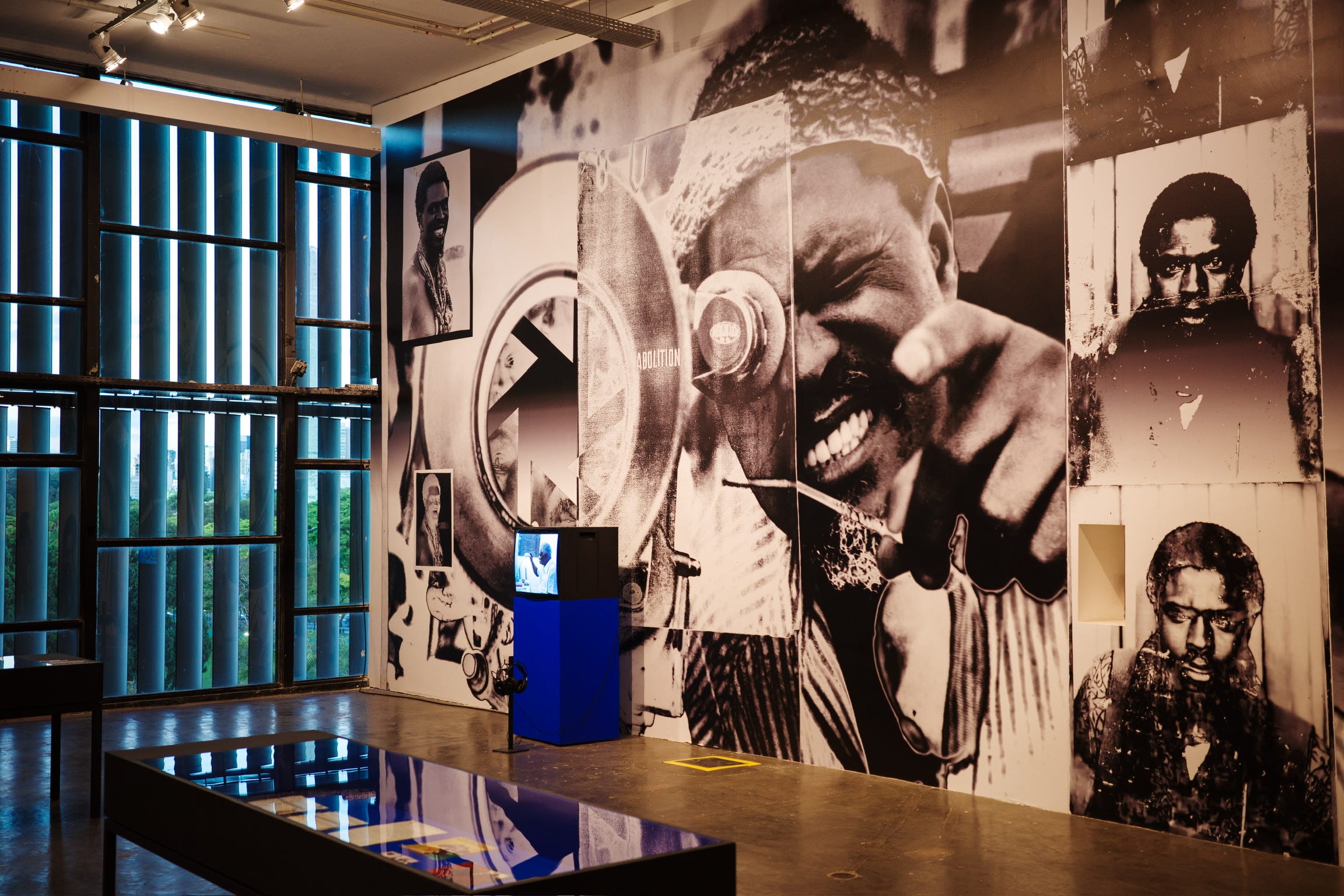
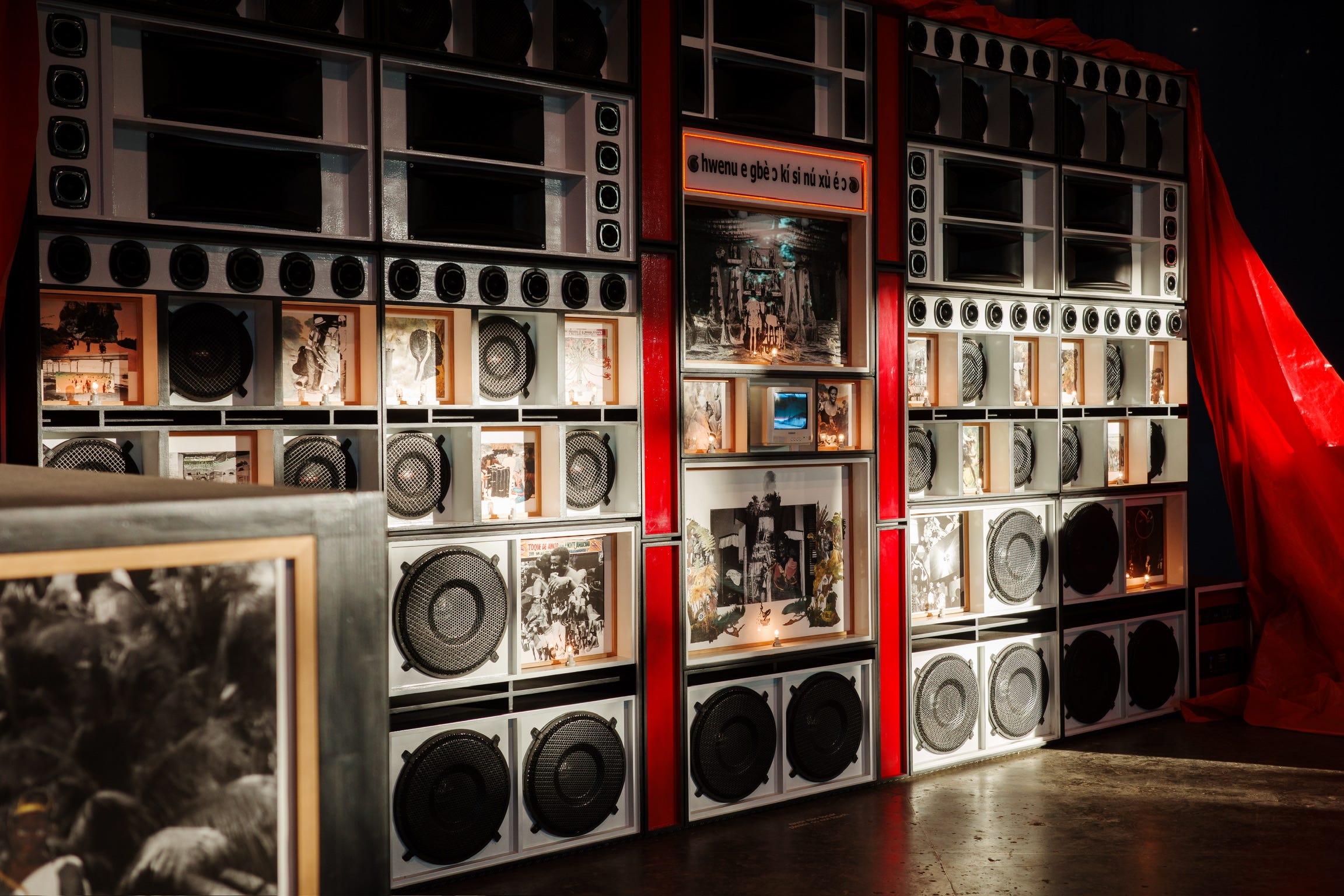
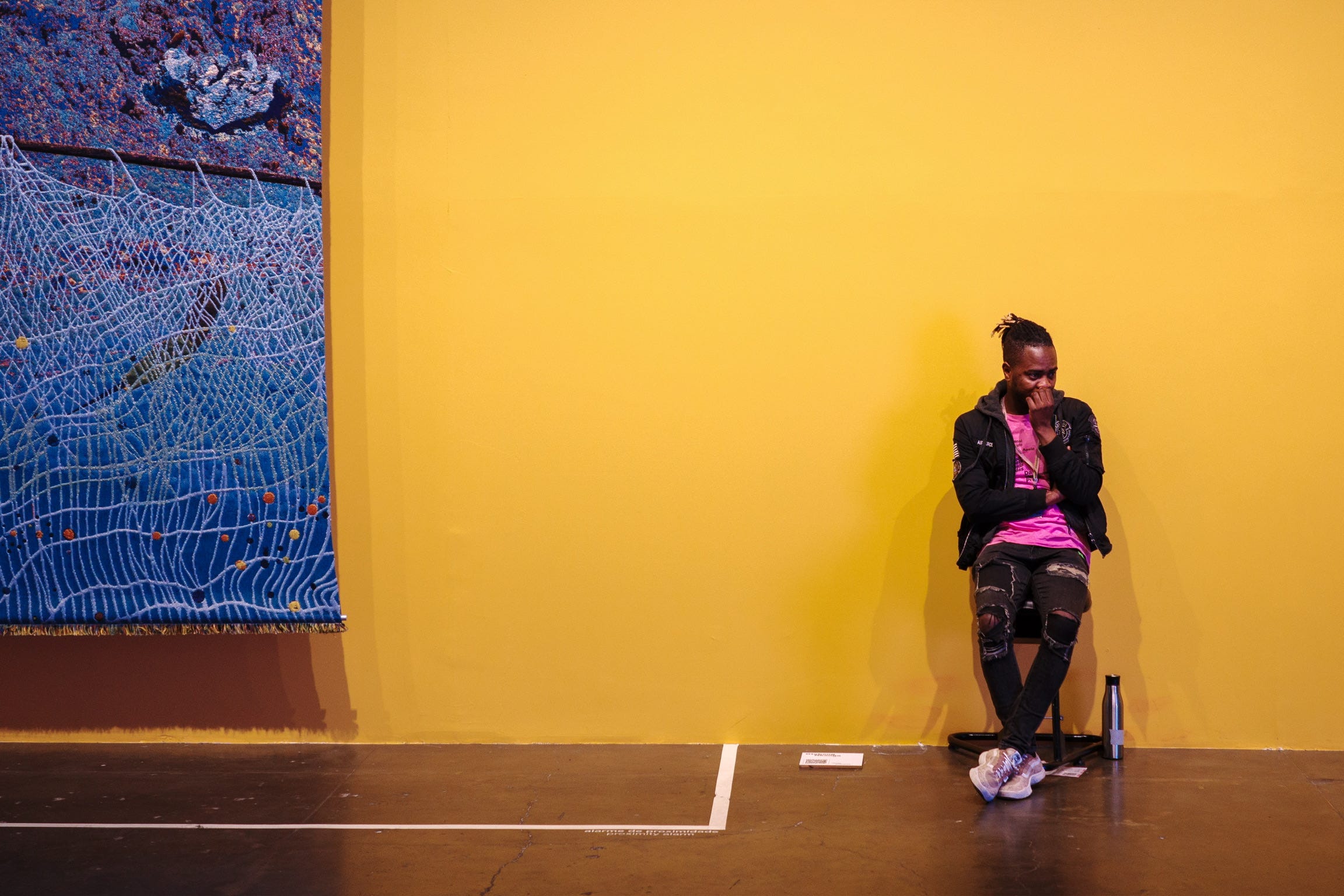
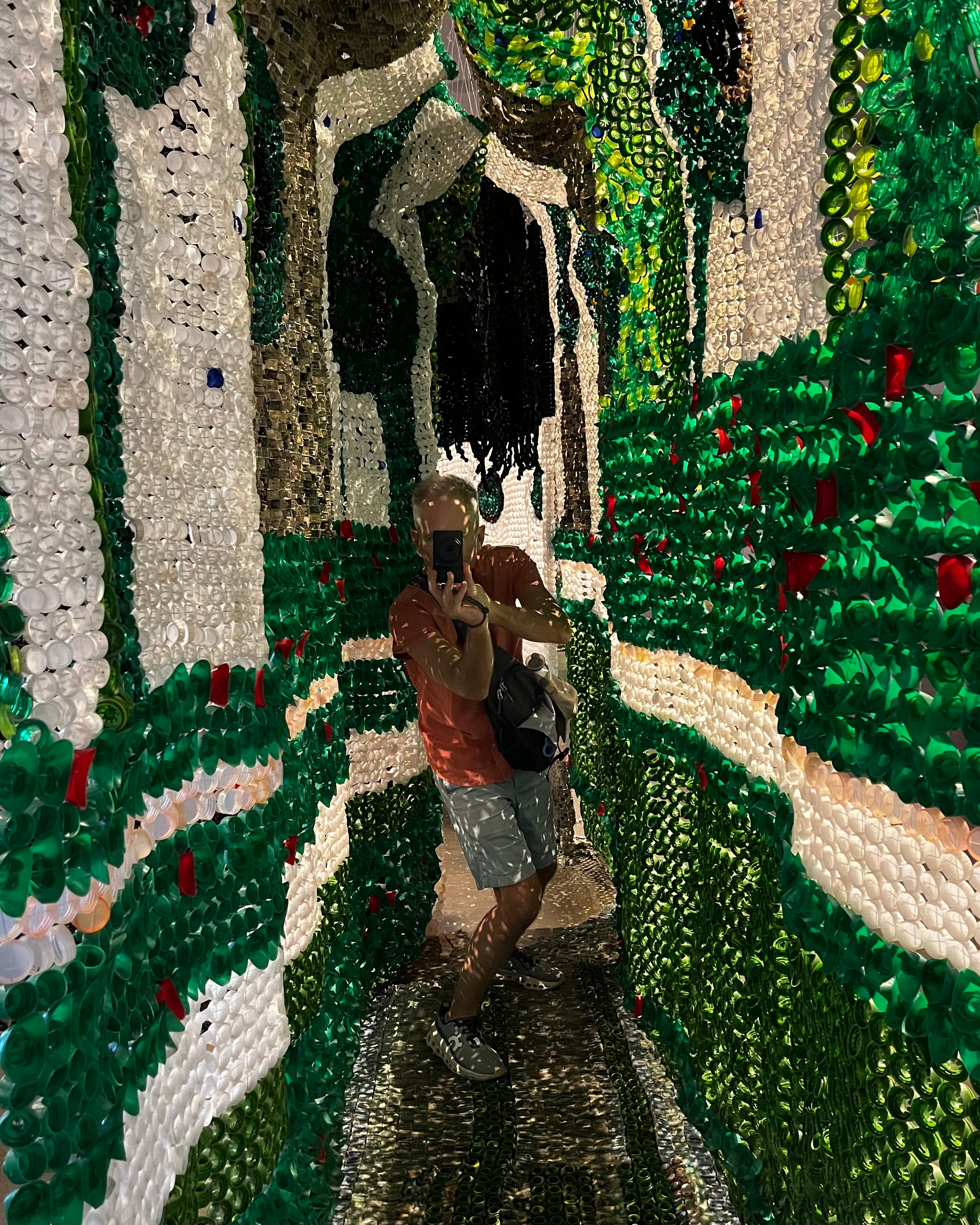
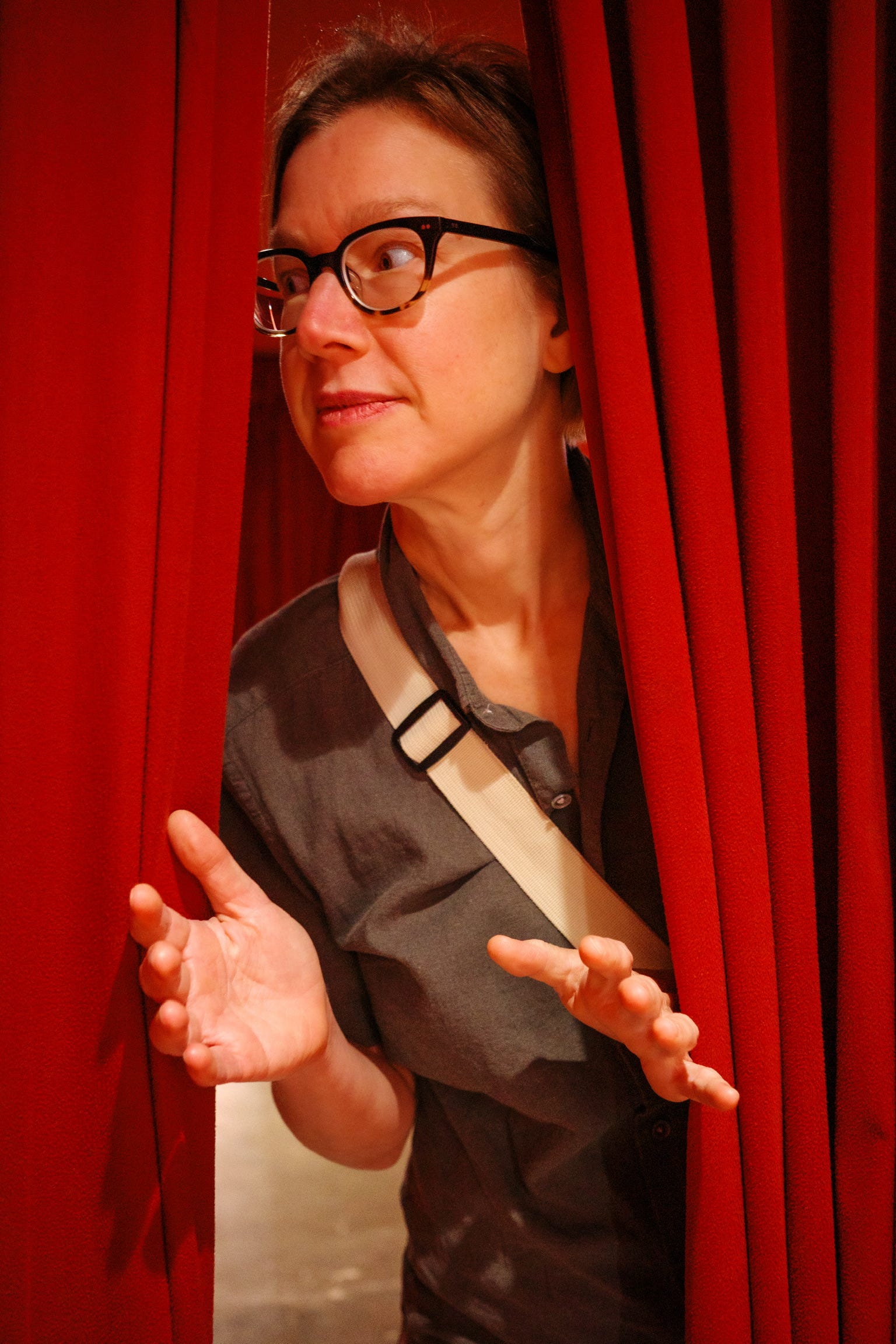
The red curtains that were used to create rooms in the wide open space reminded us of David Lynch’s Twin Peaks.
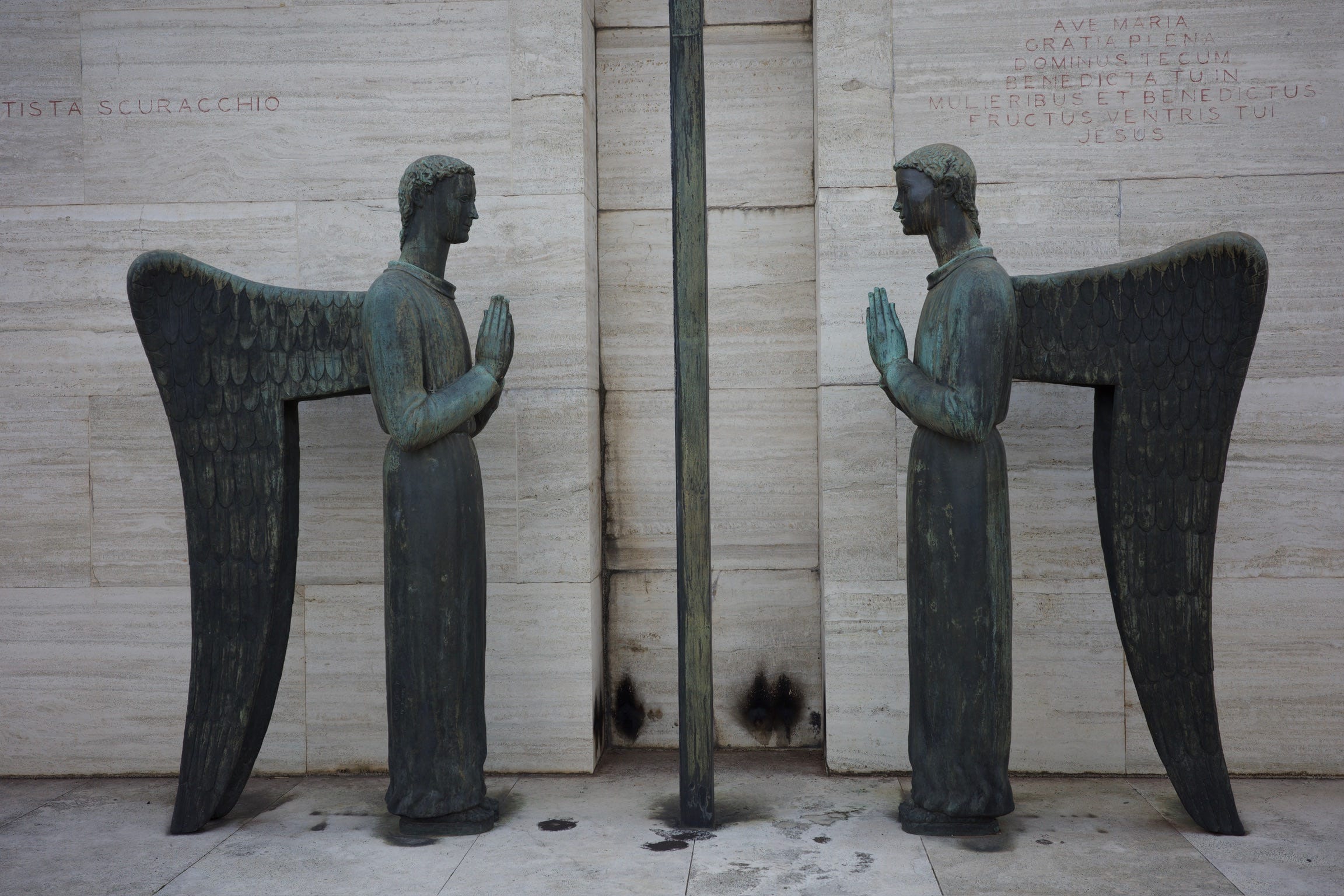
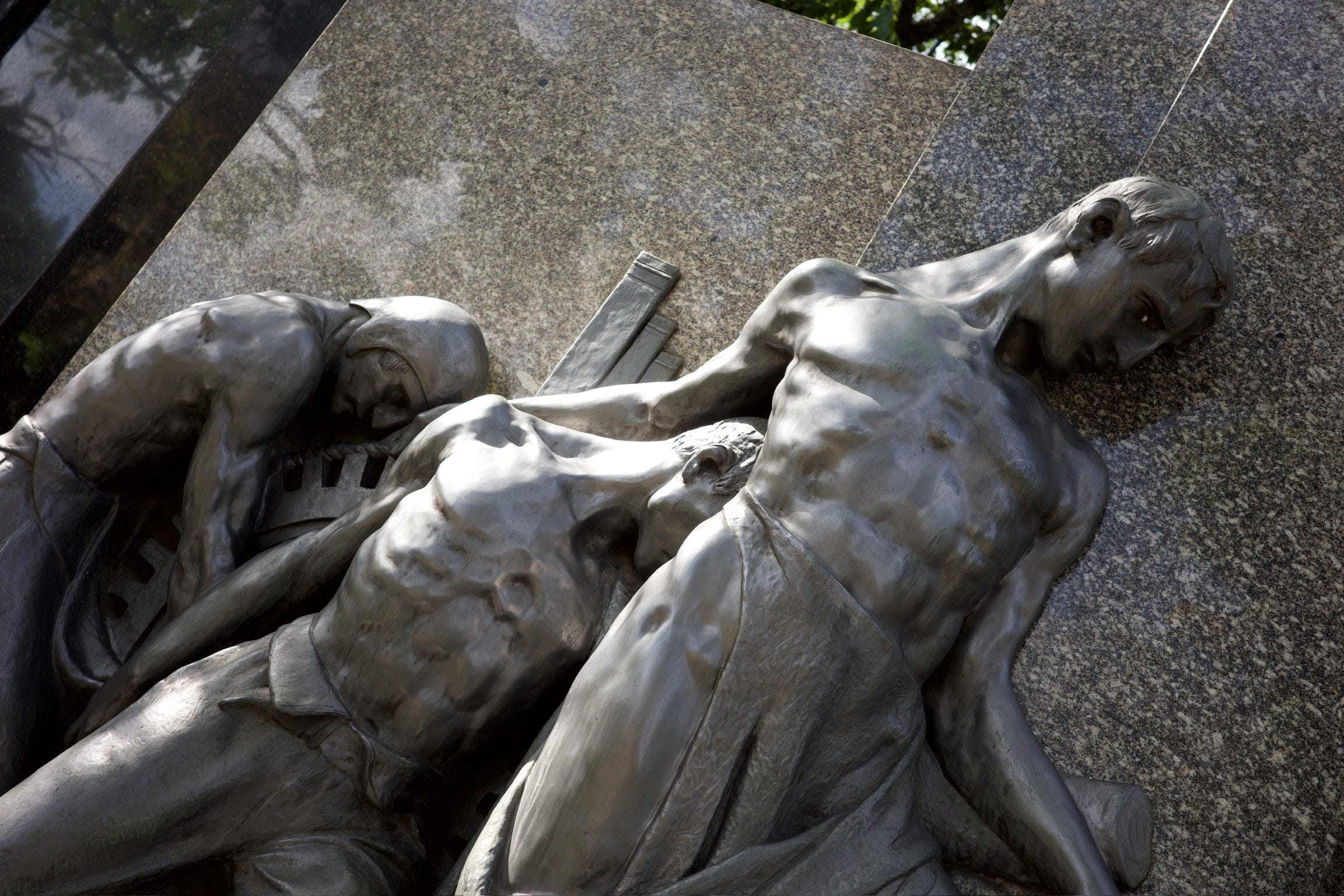
After all the lively colors, we craved something more sober and dead: the very unassuming Cemitério São Paulo. It’s not on the tourist map. We just happened to walk past it one day on our way home.
We frequent cemeteries often. I need moments to acknowledge my personal losses and feel how our mortality connects us all. There’s comfort in seeing grief expressed in metal and stone.


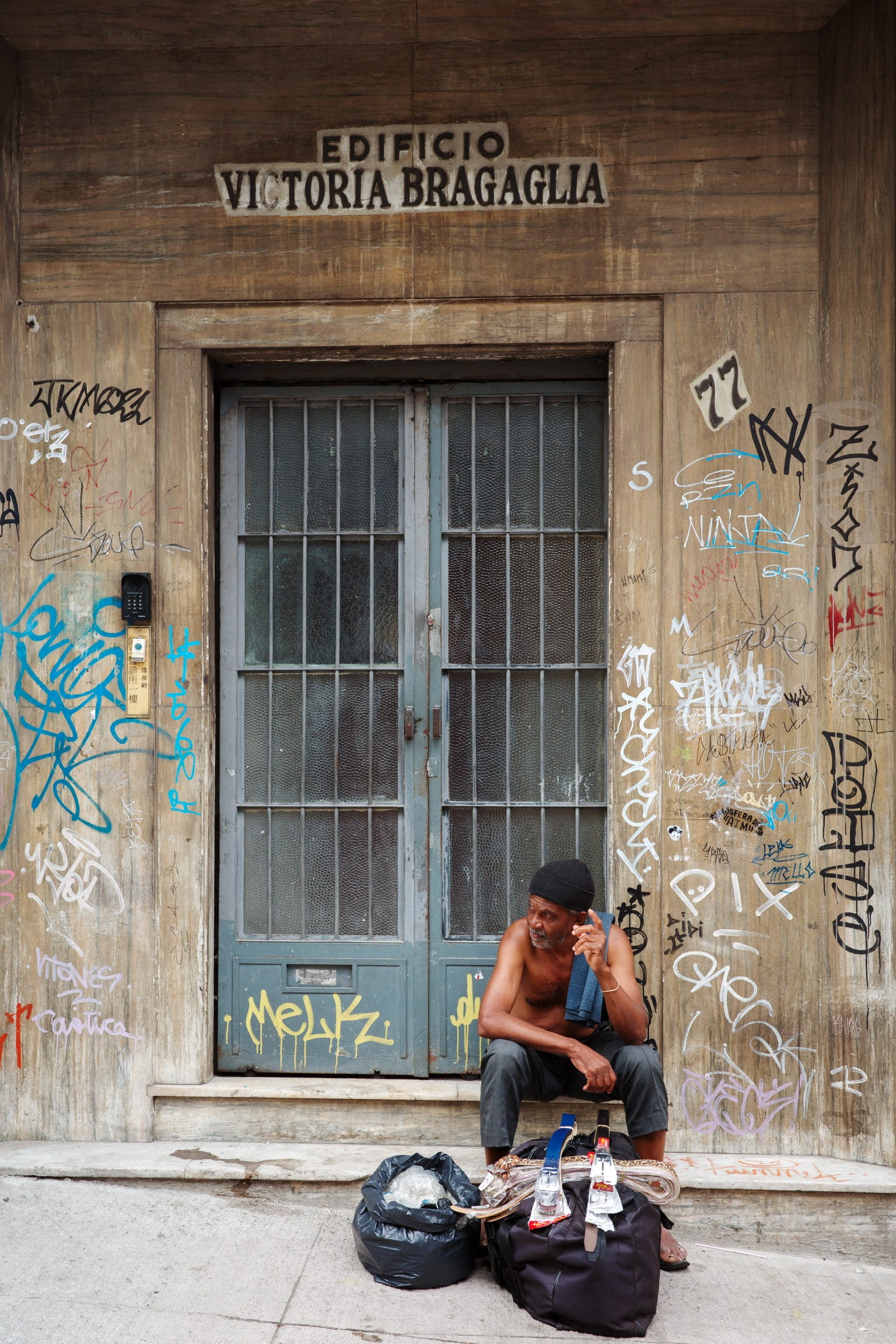
São Paulo has a vibrant night life, an incredible art scene, and a busy business center. But there is also a lot of poverty.
We did not go into the favelas. We took taxis from one neighborhood considered safe to the next. And when we witnessed poverty on the streets, we paid attention.

Our Takeaway
São Paulo is a fascinating city with millions of beautiful people. Especially if you love graffiti, live Brazilian music, and art.
I’m glad Daniel and I changed our travel plans and our minds.
Did our post change your image of São Paulo, too?
I’m Claire Polders, a Dutch author and nomad.
I was born in Gouda—yes from the cheese—studied philosophy, moved to Paris, married an American, switched to writing in English, and fell in love with Japan.
Daniel Presley is the American I married. For this newsletter he was a photographer with a Ricoh GRIIIx camera. He’s also our in-house video producer and chef.
On Wander, Wonder, Write I publish essays on my travels, my life, and my writing.
Find out more about my novels and stories on my website www.clairepolders.com.
By subscribing, sharing, commenting, and liking, you will draw more readers to my work. And I genuinely love your feedback.
If you can effort it, please consider upgrading your subscription or buy me a coffee.
I’m grateful for your support.
Author News
My latest book, Woman of the Hour: Fifty Tales of Longing and Rebellion, has just been released as an audiobook!
You can purchase Woman of the Hour from Tantor Audio.
Listen to one of my stories right here:
You can also:
Get it in print directly from my publisher (better royalties for me).
Get an ebook from Bookshop (a small extra for me at no extra cost to you).
Get it elsewhere: Amazon or Barnes&Noble.
Would you like to read a preview first? Please find the title story here.

Author Performance
On Saturday May 16th at 5pm ET on Zoom, I’ll be telling a story as a featured writer at Wham! Bam! Thank You! Slam!
The theme for this month’s slam is Mothers & Daughters.
All true stories are about 4 minutes long. So this is some intense, condensed storytelling. Please find out more here.

Other Essays on Brazil


Time to Say Goodbye
We have one week in Itoshima left. One week to bicycle to our favorite villages, shrines, and shores. One week to enjoy the sound of the ocean and the cries of birds. Then we will leave all calmness behind and surrender to the frenzy of Tokyo.
All my best,
Claire
P.S. Any tips on Tokyo? Please leave them in the comments!
Yes, I'd always thought Sao Paulo was the second cousin to Rio. Also, somehow I've recently seen photos of the city showing either rivers or canals? that pass through it. It looks much more - something - than I thought it would. Gracias for an in-depth tour.
I confess I hadn't thought much about Sao Paulo one way or the other. But I loved the pictures -- except the one of the clown!