



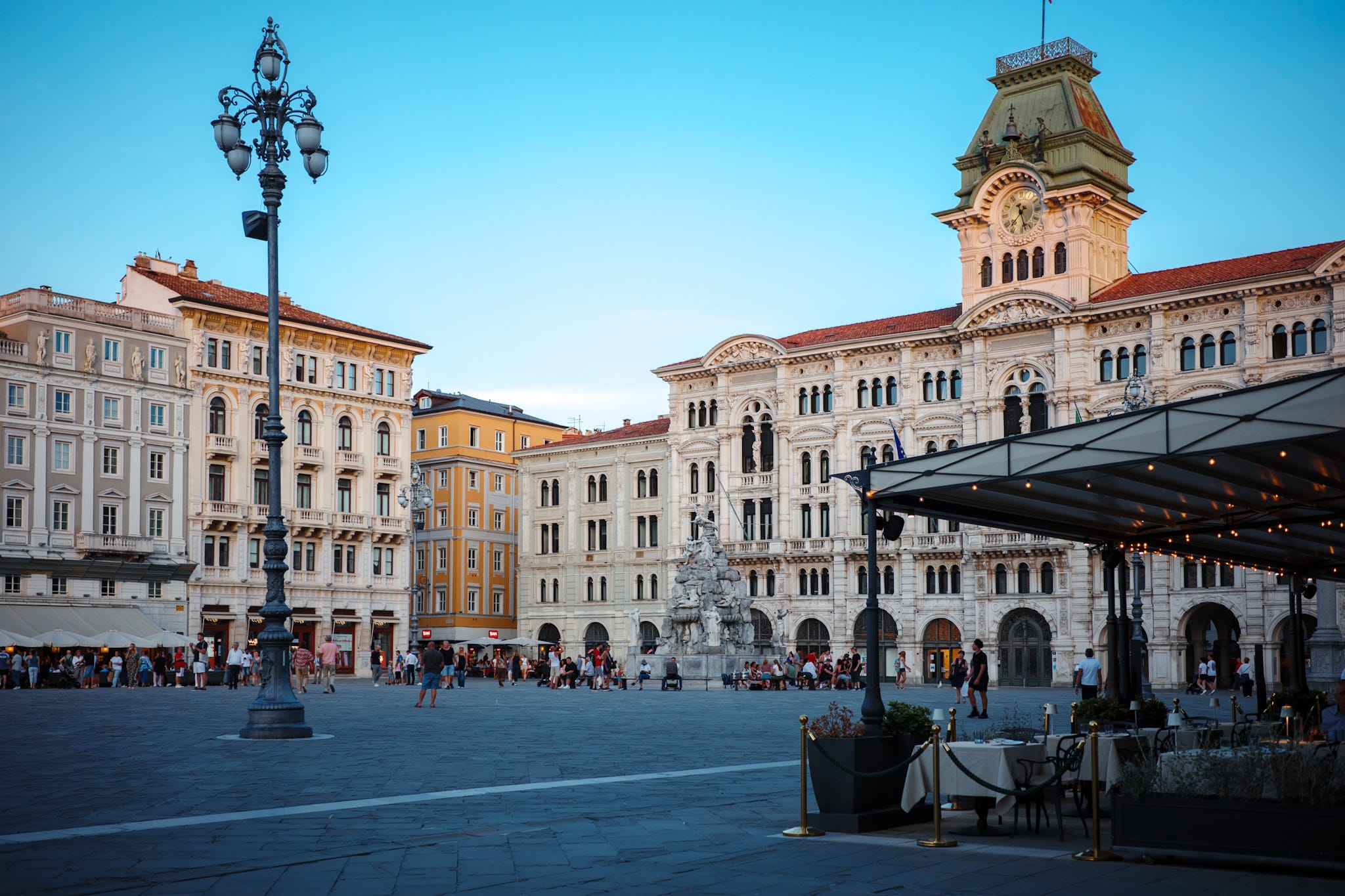
I leave the apartment at seven in the morning when the sun is still a pleasant presence in the sky. It’s early September, but Northern Italy is held captive by yet another heatwave. By noon, the rising temperature will have forced everyone into the shade. So I walk now, while I can still appreciate Trieste.
Trieste is not undiscovered. You must have heard or read its name many times. Still, this quaint city on the Adriatic coast is not yet on the tourist map like Florence, Milan, and Palermo are. It suits me well. The fewer sights I’m supposed to see, the more my imagination can roam free. I read the ruins and buildings instead of a guidebook. Stones, I learn, are patient teachers.
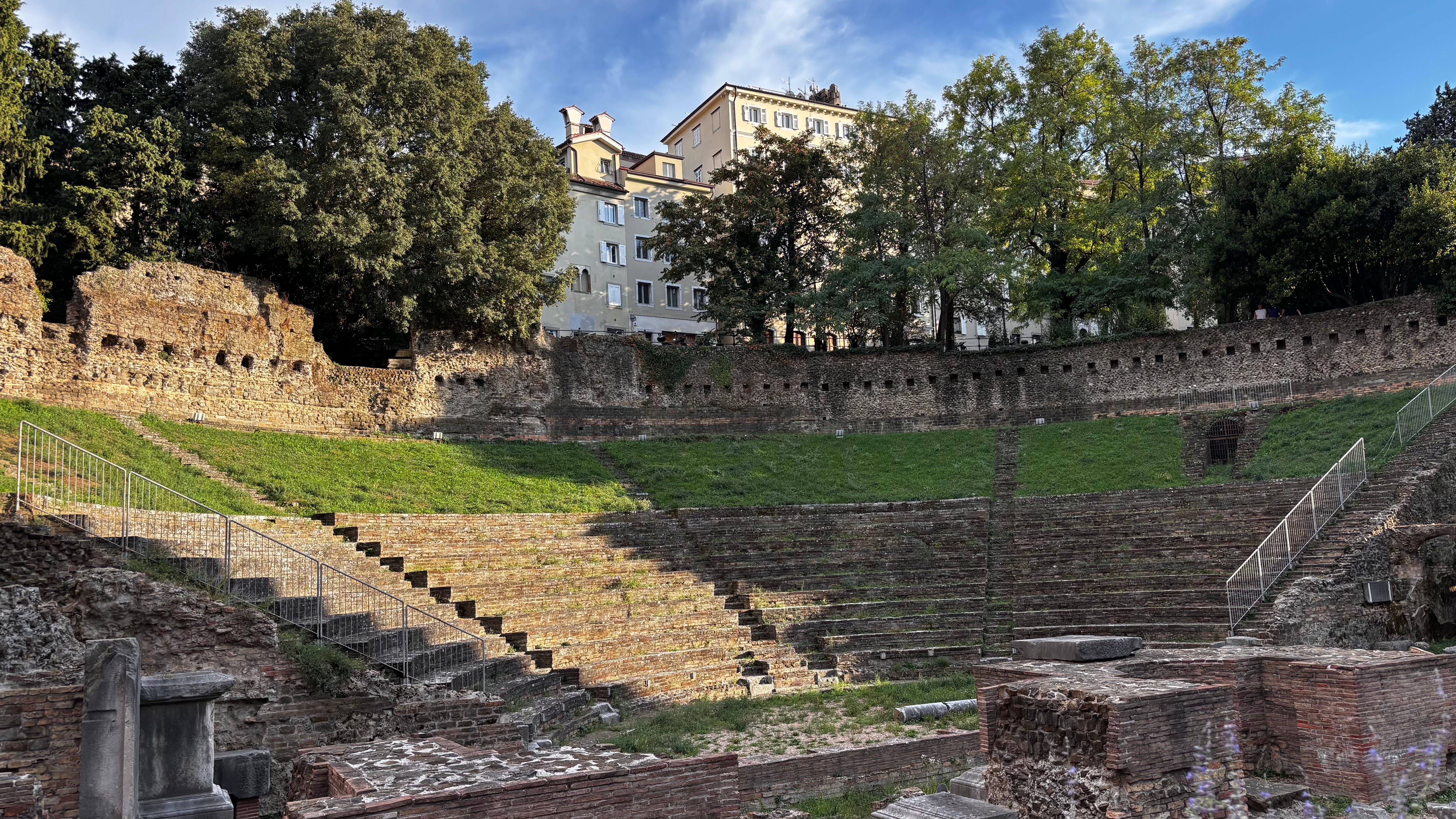
I start at the Teatro Romano, a half-bowl of brick built into the hillside. Except for a cat asleep on what used to be the front row, the place is empty. The Romans came here two thousand years ago and left this behind when their empire fell. Although the grandeur of Rome’s Colosseum is missing, the theater’s age with its direct line into the past, speaks of lives forged, lost, and celebrated.
I climb to Castello di San Giusto, a fortress built under Venetian dominion in 1368. A century later, Austria took control of Trieste and fortified the castle to protect its realm. The walls are massive, impenetrable.
In the castle’s shade lie the scattered columns of the Forum Romanum, and built on the remains of a Roman temple stands Trieste’s cathedral. The church, first finished in 1320, has been enhanced many times, most notably with Byzantine mosaics. It’s empty of people and full of light that makes me feel watched.


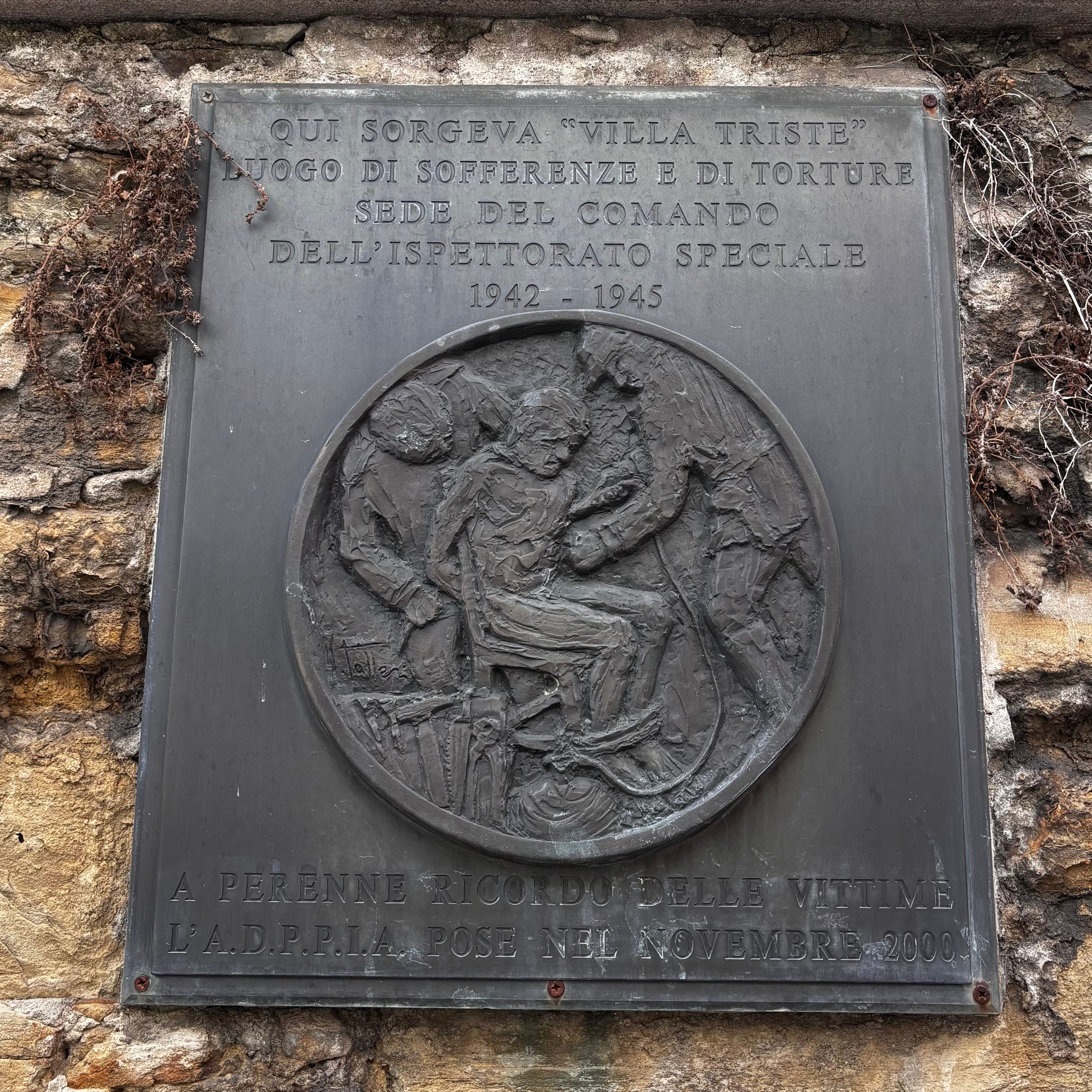
Not far from the castle I find the memorial plaque for La Villa Triste, the House of Sorrows. Here, in a home confiscated from a Jewish family in 1942, the fascists erected their torture chambers to break their opponents. They blasted loud music to obscure the screams that were heard regardless by neighbors day and night.
The building itself was torn down after the war—some say to erase the shameful past and not give ghosts a chance to linger.
By the time I descend into the city center, Trieste has woken up. Dogs are being walked by their humans or the other way around. Friends meet one another on terraces for their first espresso of the day. A greengrocer puts out his seasonal goods and arranges figs into a pyramid. They’re dark and split, oozing their own juice, and I buy a handful for breakfast later.
Coffee, by the way, is what this city runs on. When Emperor Charles the VI from the Habsburg Empire declared Trieste a Free Port, a title that came with considerable rights and opportunities, Trieste became a gateway for all sorts of goods traveling from the Ottoman Empire to Vienna. Most notably coffee. By the late nineteenth century, there were sixty import companies, ten roasters, and ninety-eight coffee shops. Illy was born here in 1933 and still thrives today. Drinking coffee in Trieste is drinking history.
And, yes, it tastes great.
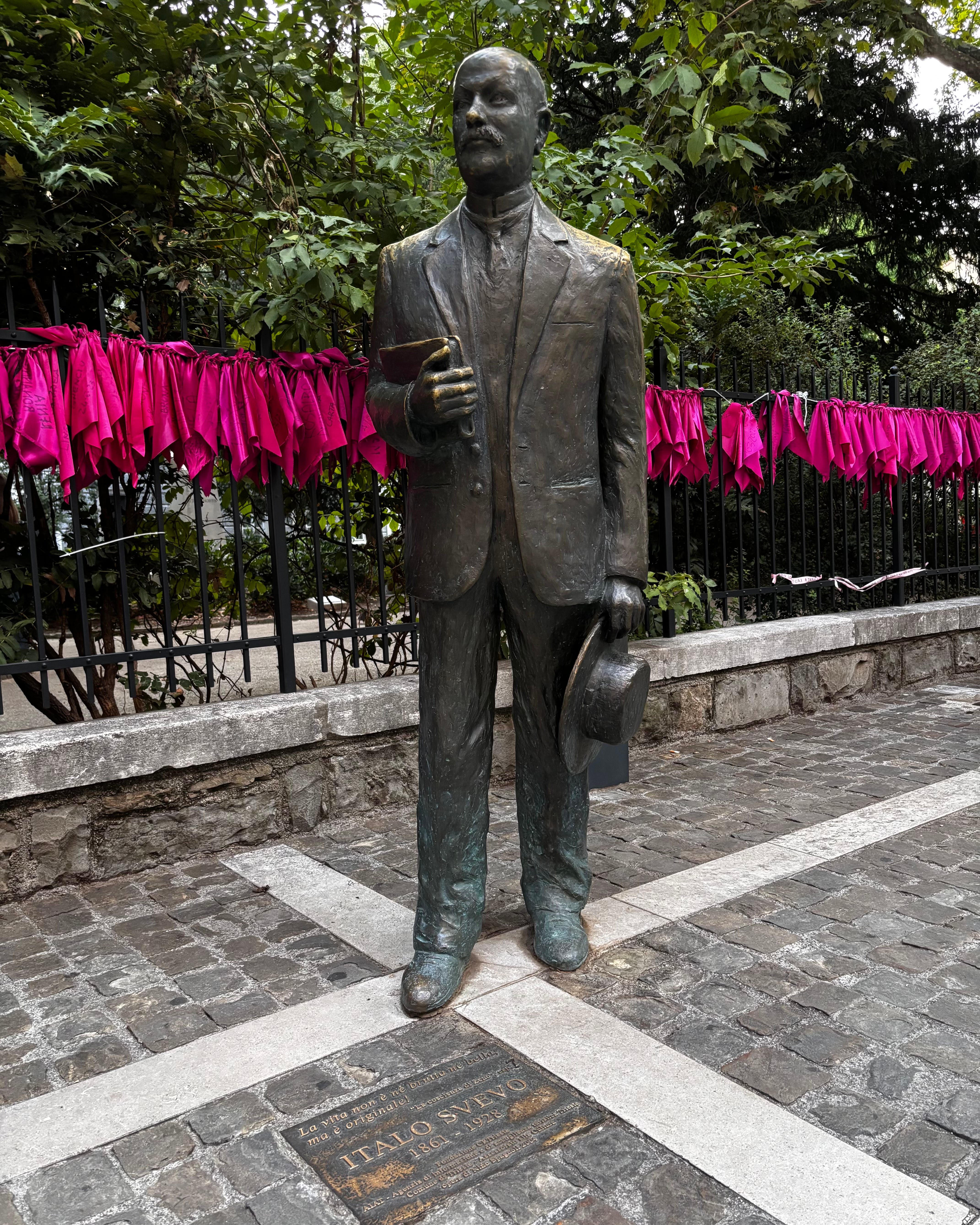
Past and present keep mingling as I weave through a maze of little streets. There’s the bronze statue of Trieste-born Italo Svevo, reminding me of how much I loved his novel Zeno’s Conscience.
And there’s the former Jewish getto, reminding every one of the reality and horror of antisemitism.
“Unlike other sicknesses, life is always fatal. It doesn't tolerate therapies. It would be like stopping the holes that we have in our bodies, believing them wounds. We would die of strangulation the moment we were treated.”
― Italo Svevo, Zeno’s Conscience
James Joyce taught English in Trieste to pay the rent and befriended Italo Svevo while writing A Portrait of the Artist as a Young Man.
It’s easy to imagine Trieste as a city where artists and travelers meet.
“You made me confess the fears that I have. But I will tell you also what I do not fear. I do not fear to be alone or to be spurned for another or to leave whatever I have to leave. And I am not afraid to make a mistake, even a great mistake, a lifelong mistake and perhaps as long as eternity too.”
—James Joyce, A Portrait of the Artist as a Young Man
Travel writer Jan Morris loved this city and dedicated a book to it that I highly recommend: Trieste and the Meaning of Nowhere.
“There are people everywhere who form a Forth World, or a diaspora of their own. They are the lordly ones. They come in all colours. They can be Christians or Hindus or Muslims or Jews or pagans or atheists. They can be young or old, men or women, soldiers or pacifists, rich or poor. They may be patriots, but are never chauvinists. They share with each other, across all the nations, common values of humour and understanding. When you are among them you will not be mocked or resented, because they will not care about your race, your faith, your sex or your nationality, and they suffer fools if not gladly, at least sympathetically. They laugh easily. They are easily grateful. They are never mean. They are not inhibited by fashion, public opinion or political correctness. They are exiles in their own communities, because they are always in a minority, but they form a mighty nation, if they only knew it. It is the nation of nowhere, and I have come to believe that its natural capital is Trieste.”
—Jan Morris, Trieste and the Meaning of Nowhere
I arrive at Piazza dell’Unità with its imposing buildings. The town hall dates from 1875 and used to have two bronze automatons striking the bells every hour. Nowadays, Mizhez and Jachez live in the museum of Castello di San Giusto.


Palazzo del Governo was completed in 1905 in a grand Habsburg style with golden Venetian mosaics on its façade and now serves as the Prefecture of Trieste. Right across, the Palazzo del Lloyd Triestino, was built in 1883 for the famous shipping company and is now the seat of the Friuli Venezia Giulia region.


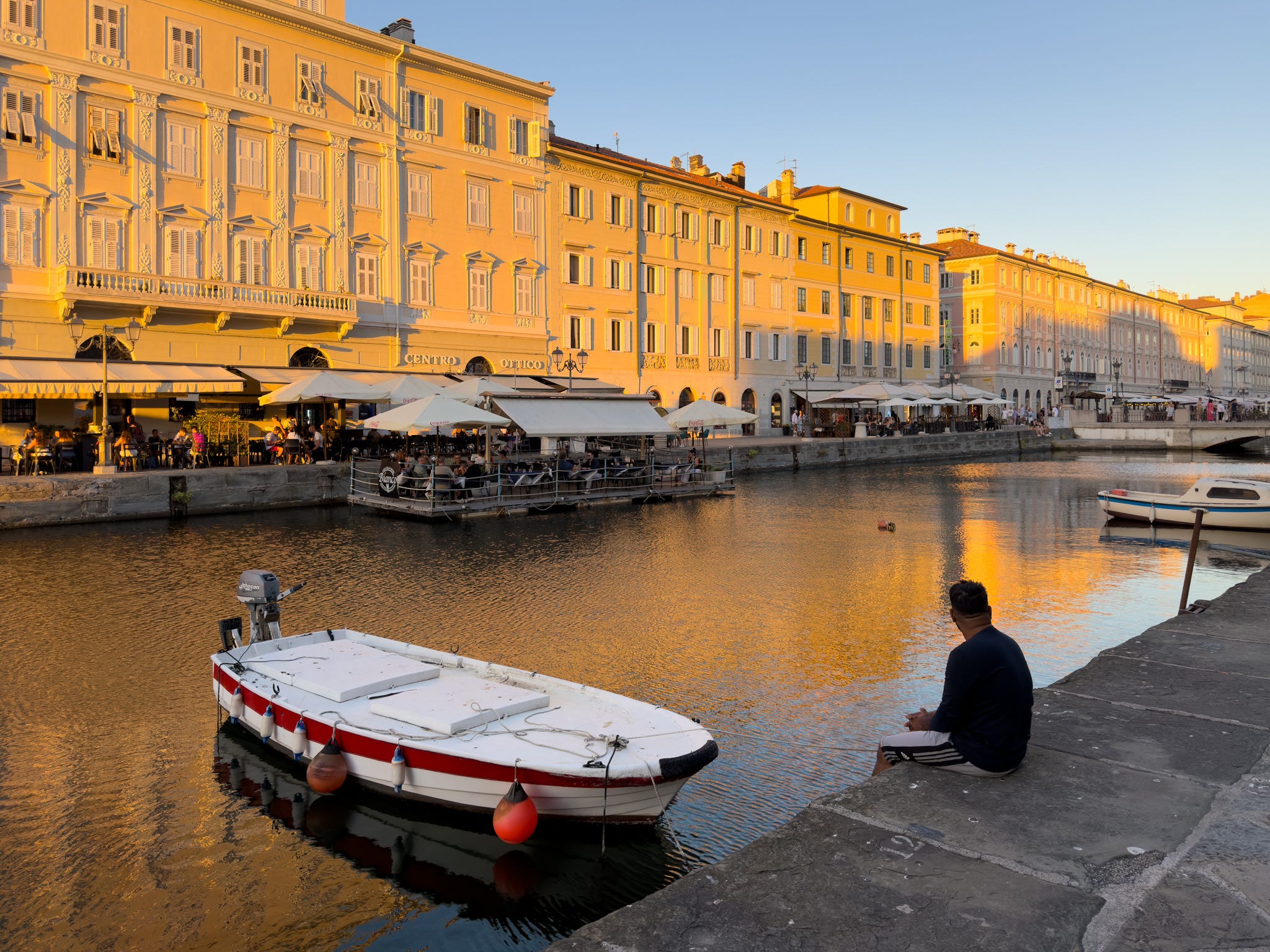
I stroll past Canal Grande, not quite as grand as its namesake in Venice, and stand still at the waterfront where the old stone pier juts out into the Adriatic.
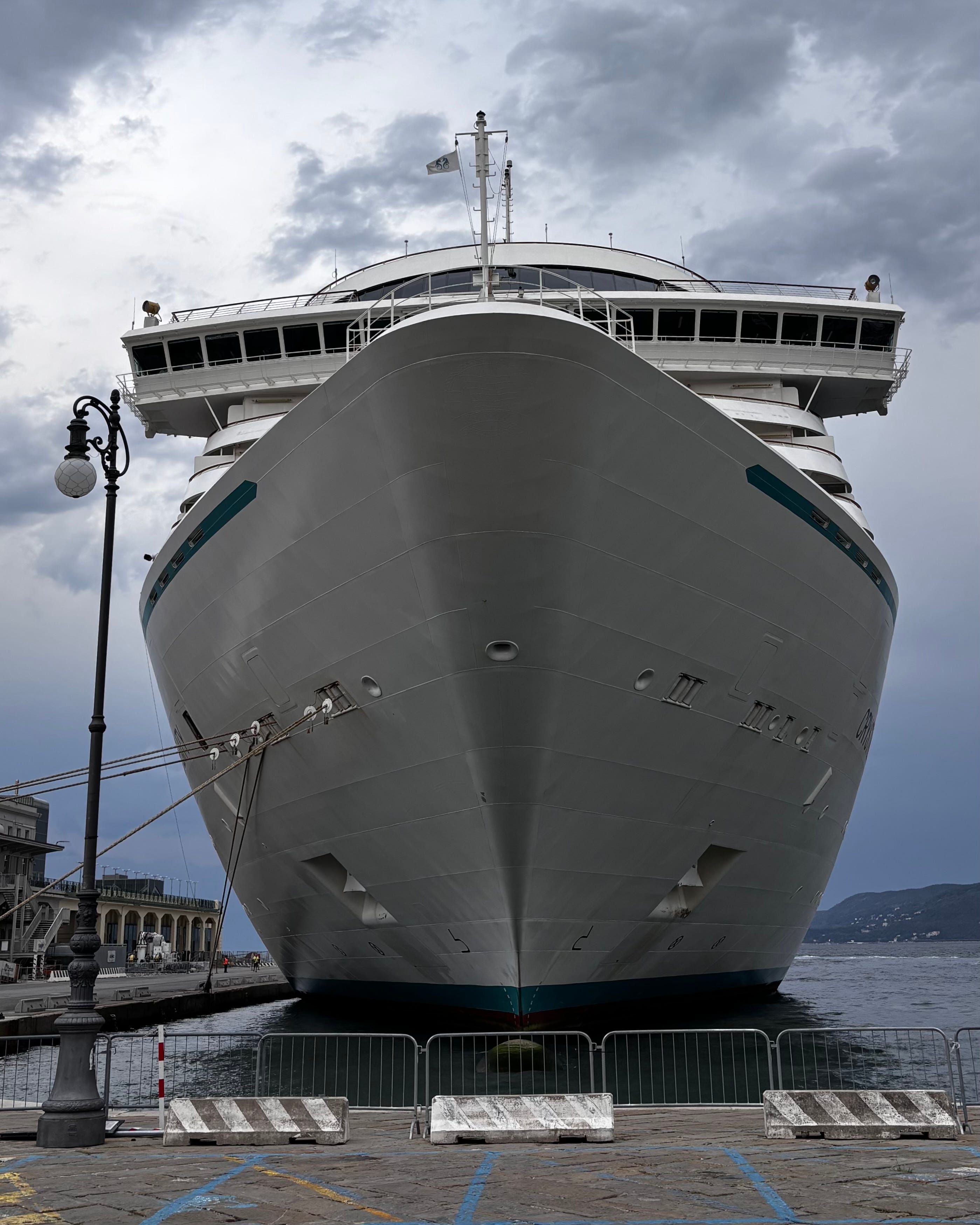
To my left lies a cruise ship the size of a city block. After the pandemic, Venice banned these floating giants from its fragile lagoon, and Trieste, looking into an undefined future, welcomed tour companies looking for a new home.
A slice of the harbor is semi-permanently fenced off for coaches that transfer thousands of passengers to Venice and back every day.
As I walk past fragrant Eataly, a supermarket and restaurant, I’m already hungry for breakfast, but I don’t go inside. The place is priced for cruise ship passengers. I feel more at home in the local Conad, that sells low-budget products from Italian origin of acceptable quality.
I keep going along the shore and arrive at the industrial harbor where container ships dock, cranes turn, and hulls are being built.
What will Trieste become? It may be a new tourist hub, a way station for Venice’s overflow. It may expand its already present network of scientific institutions and laboratories. It may reinvent its shipping industry.
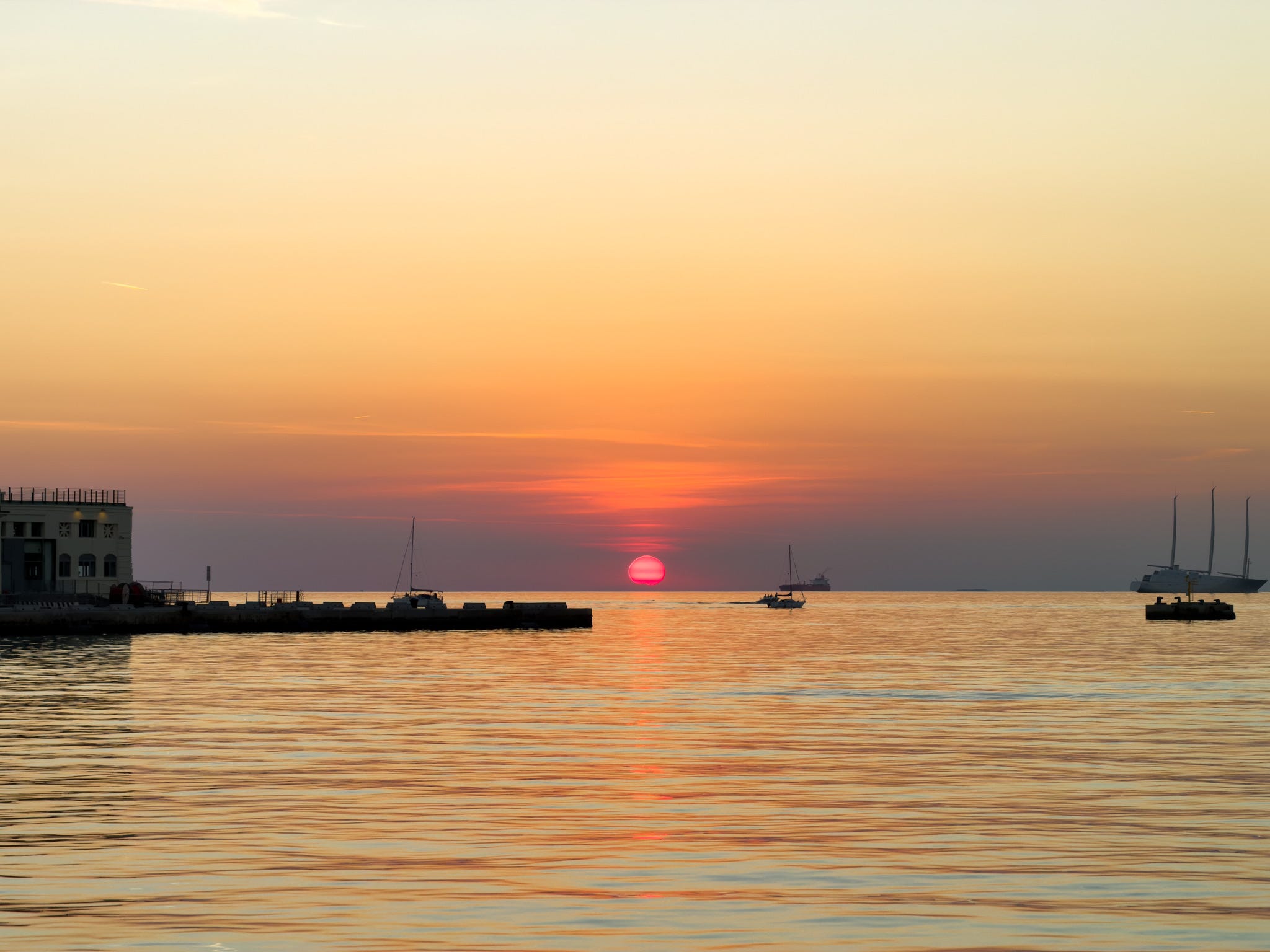
In my apartment I pace on creaking wooden floors and browse bookshelves holding centuries of knowledge. I prepare breakfast with chia seeds, sheep-milk ricotta, and figs. I dive into the novel I’m editing, looking out the windows at the Adriatic Sea.
All day, the city stays with me—its past so insistent, its present so well-caffeinated, its future so unwritten.
I’m Claire Polders, a Dutch author and nomad.
I was born in Gouda—yes from the cheese—studied philosophy, moved to Paris, married an American, switched to writing in English, and fell in love with Japan.
The American is Daniel Presley, musician, music producer, scenarist, and photographer. The better photos in this post are his. He shoots with a Ricoh GRIIIx and a Ricoh GRIV Monochrome.
For Wander, Wonder, Write I publish essays on my travels, life, and writing.
Find out more about my novels and stories on www.clairepolders.com.
By subscribing, sharing, commenting, and liking, you will draw more readers to my work. And I genuinely love your feedback. I’m grateful for your support.

Related Essays


Time to Say Goodbye
I will be in Trieste until the end of the month. Writing, walking, drinking espresso, and baking my own gluten-free chickpea bread.
Occasionally, I also hop on a bus bound for Barcola, where the swimming is excellent.
Life is calm here for the moment and good.
All my best,
Claire
P.S. What should I not miss while I’m here?
Claire, I love your writing. I think that frequently when I read your posts, and today I stopped by to say so on my way to find your book, Woman of the Hour.
素敵な記事。
こういう記事に出会えるのがSubstackの素晴らしいところだ。
トリエステに行ってみたくなりました。