


Controra (noun): the quiet, scorching hours of the early afternoon, known elsewhere in the world as “siesta.”
The stones of Nardò were not laid for easy walking. I must watch my step on the uneven streets and prevent an otherwise likely slip. Centuries have polished the ochre stones to a shine.
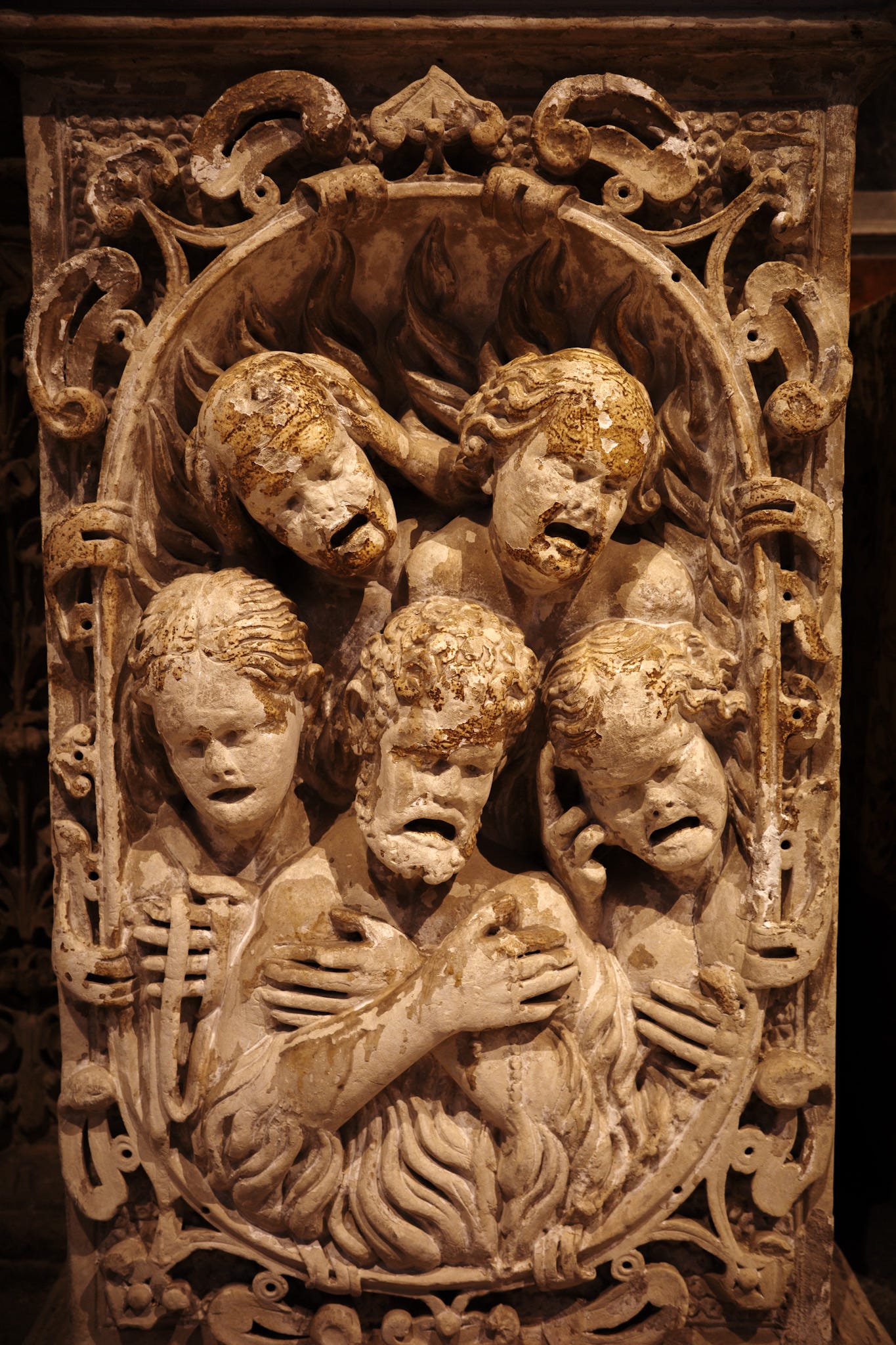
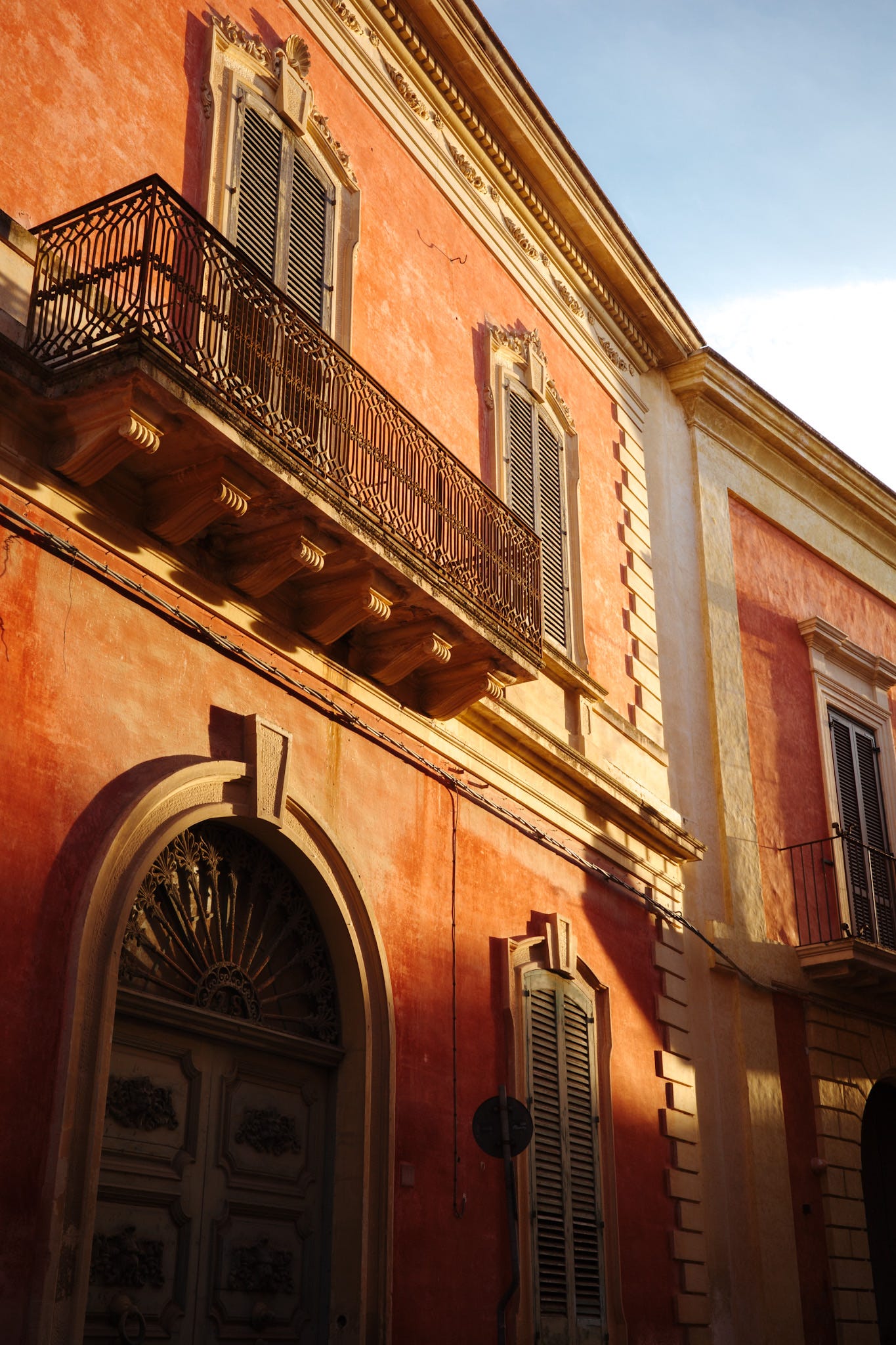
The town’s beauty is such, however, that I must also look up. I saunter past centuries-old façades and pastel-colored palazzos. Every street offers a gem: a majestic door, a play of light and shadow.
This newsletter contains many photos and may be clipped. If it ends unexpectedly, click “View entire message” or “Read more” at the bottom to see the rest.
It’s early October, but Nardò has not been told. The sun blazes in mid-afternoon as though we’re still in the high of summer.
Daniel and I flew from Trieste to Brindisi in one hour, then made our sluggish way on buses and trains to Lecce, where we had lunch, and finished our journey in Nardò. We’re deep in the south now, in Italy’s heel, the Salento area of the region Apulia, better known as Puglia.
The pietra leccese, the soft limestone from Lecce, first absorbs the bright light, then hands it back to us as a warm glow.
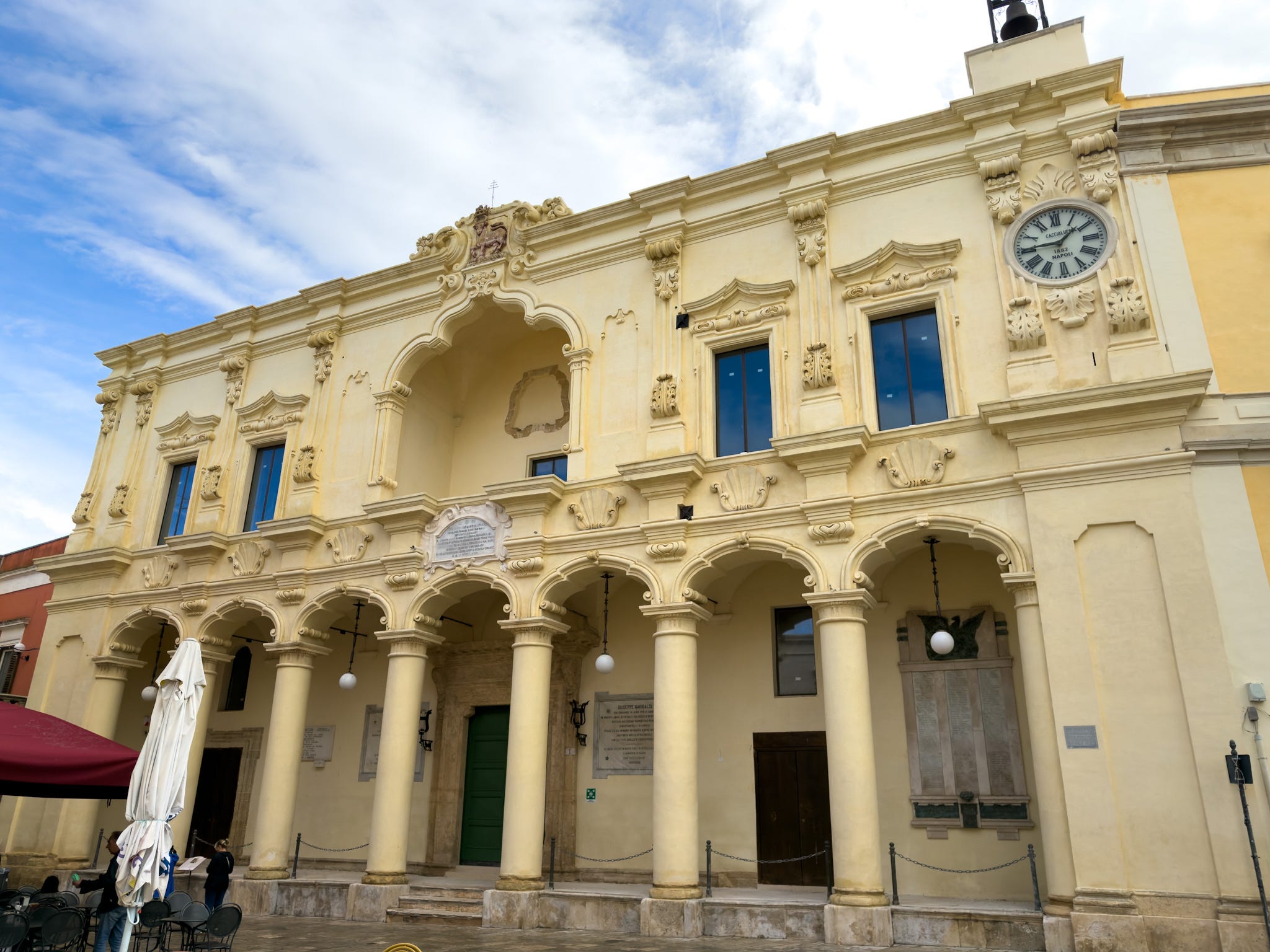
Much of Nardò’s glory, however, is faded. It’s a town for people like us, who love dilapidated beauty and crumbling walls, who visit a place to take in its history and relish its slow pace.


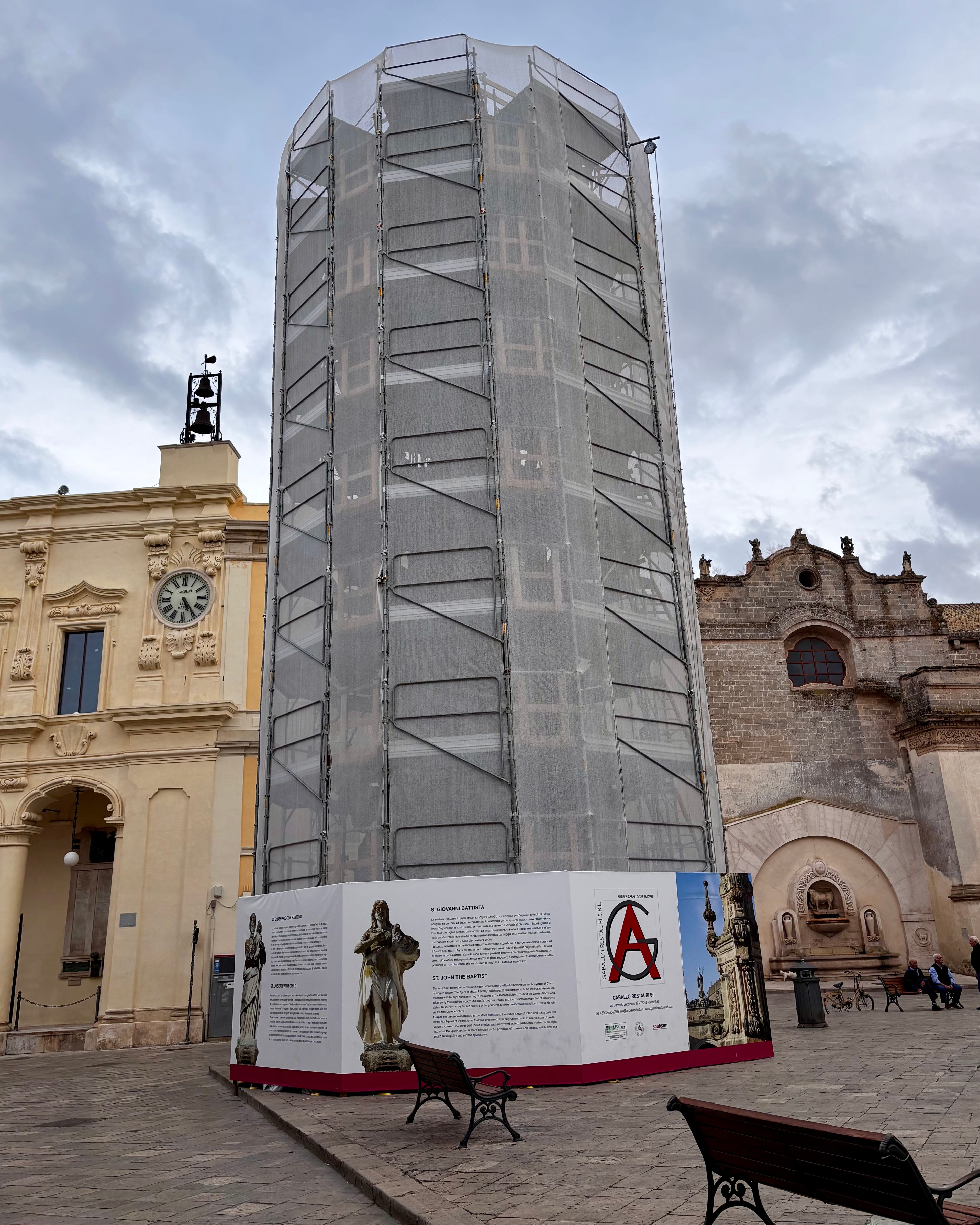
For one week, we live in a renovated stone apartment with a roof-top terrace steps away from the town’s main square, Piazza Salandra. There rises the famous baroque spire Guglia dell’Immacolata, nineteen meters high. But we cannot admire it. The spire is surrounded by scaffolding and wrapped in sheeting. There are no renovation workers present, though, not even their traces. The project seems stalled or dead.
In fact, I see no people around, save for a few tourists like us. The shops are closed; the streets, deserted. During la controra, residents withdraw from public spaces to avoid the heat (and the spirits the folklorists say). There are only some lone teenagers in shaded niches, staring at their phones, and several protected stray cats.


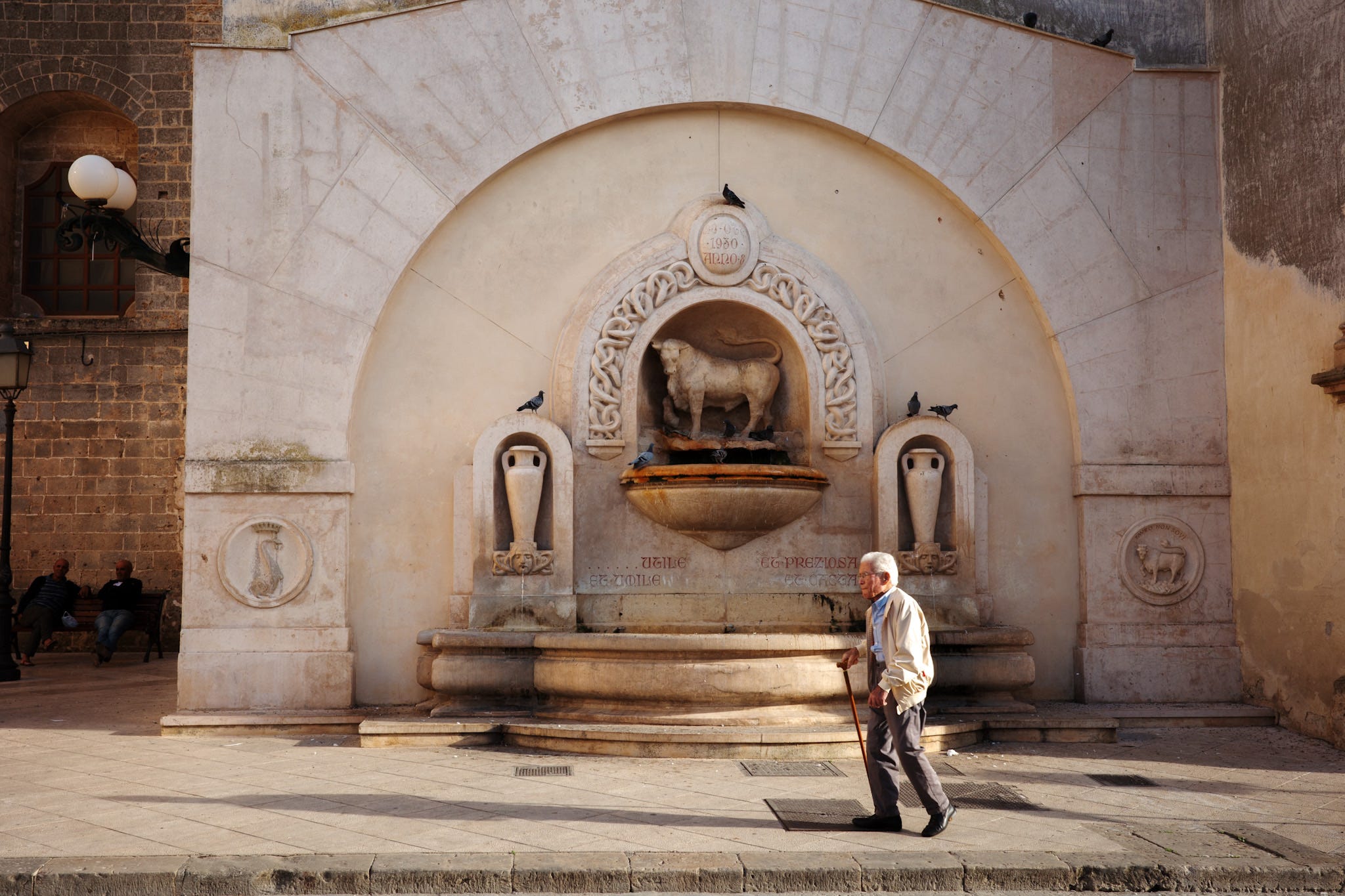
I observe the Fontana del Toro, which is popular with the pigeons. The bull also appears in Nardò’s civic crest. He signifies the legendary bull that scraped the dry ground to reveal a much needed natural spring, which led to the town’s foundation.
I get more curious. What was Nardò like before the excess of baroque took over?
I order an espresso from one of the few terraces that are open and read aloud to Daniel what I find.
The first traces of human presence date as far back as Paleolithic times, yet it was the Messapi (migrating from modern-day Albania) who settled here perhaps as early as the 8th century BC.
Their ancient defense structures are no longer visible to non-archeologists like me, but they gifted the town with the beginnings of its name. They called it Nareton, with “nar” meaning water. The name turned into Nerìton under the Greeks, Neretum under the Romans, and finally turned into the modern Italian Nardò.
The Romans took over in 269 BC and they stayed in power for over seven centuries. Emperor Trajan built his Traiana road through the town in 109 AD to aid with his imperial trade. But to see any Roman ruins, I would have to travel closer to the Ionian coast (some six kilometers away). Perhaps another day.
After the fall of the Western Roman Empire, the Byzantines gained power and even the Lombards ruled for a brief stint.
What did all these people want with this town? Why was it so coveted?
It was largely because of the fertile land surrounding Nardò, the farmers who could be exploited, and its position: well-connected by roads it was a strategic spot for rulers seeking to build their empire and it was away from the vulnerable coast. Still, Nardò was repeatedly pillaged by Saracen raiders arriving from Sicily.
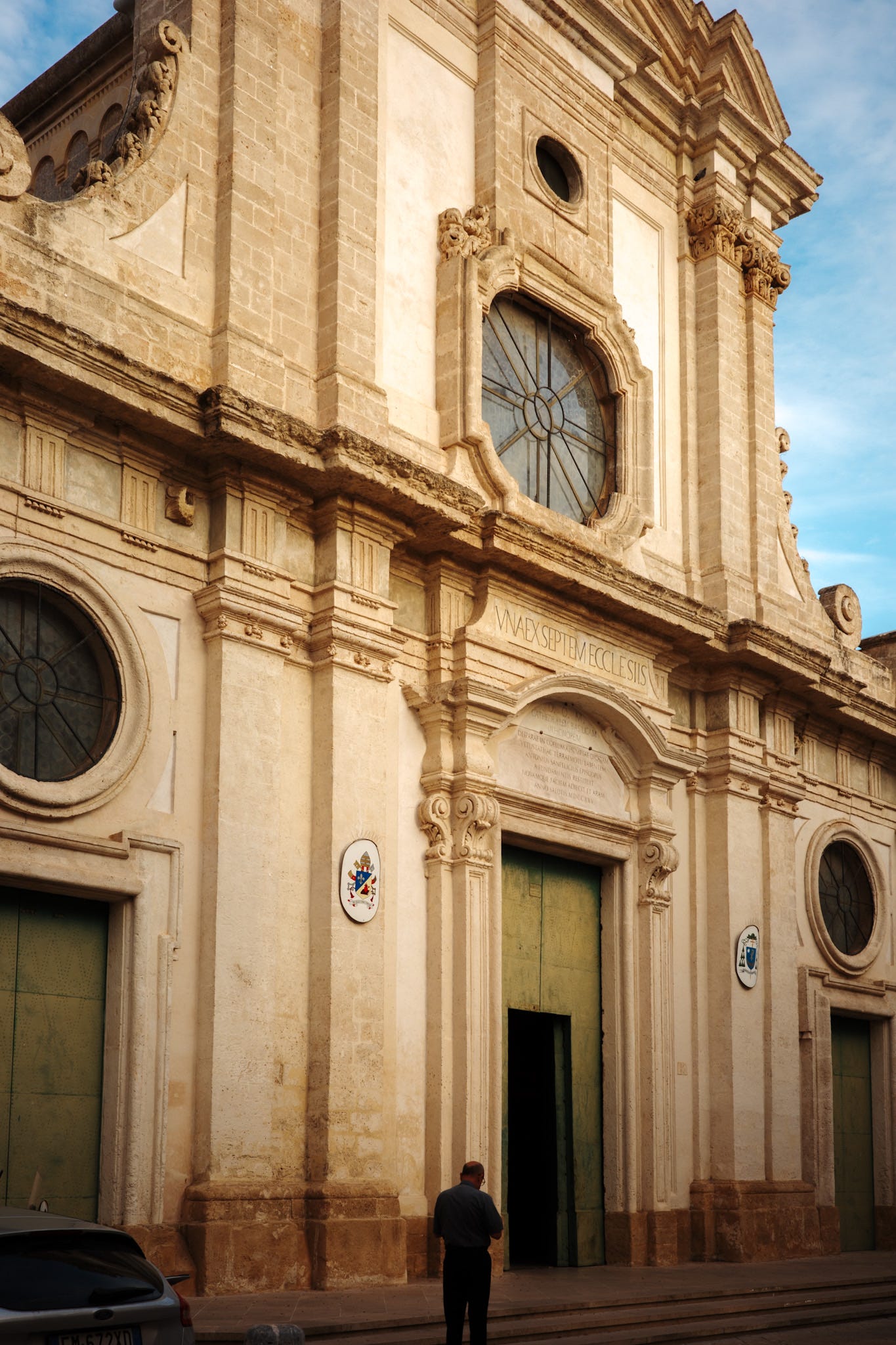
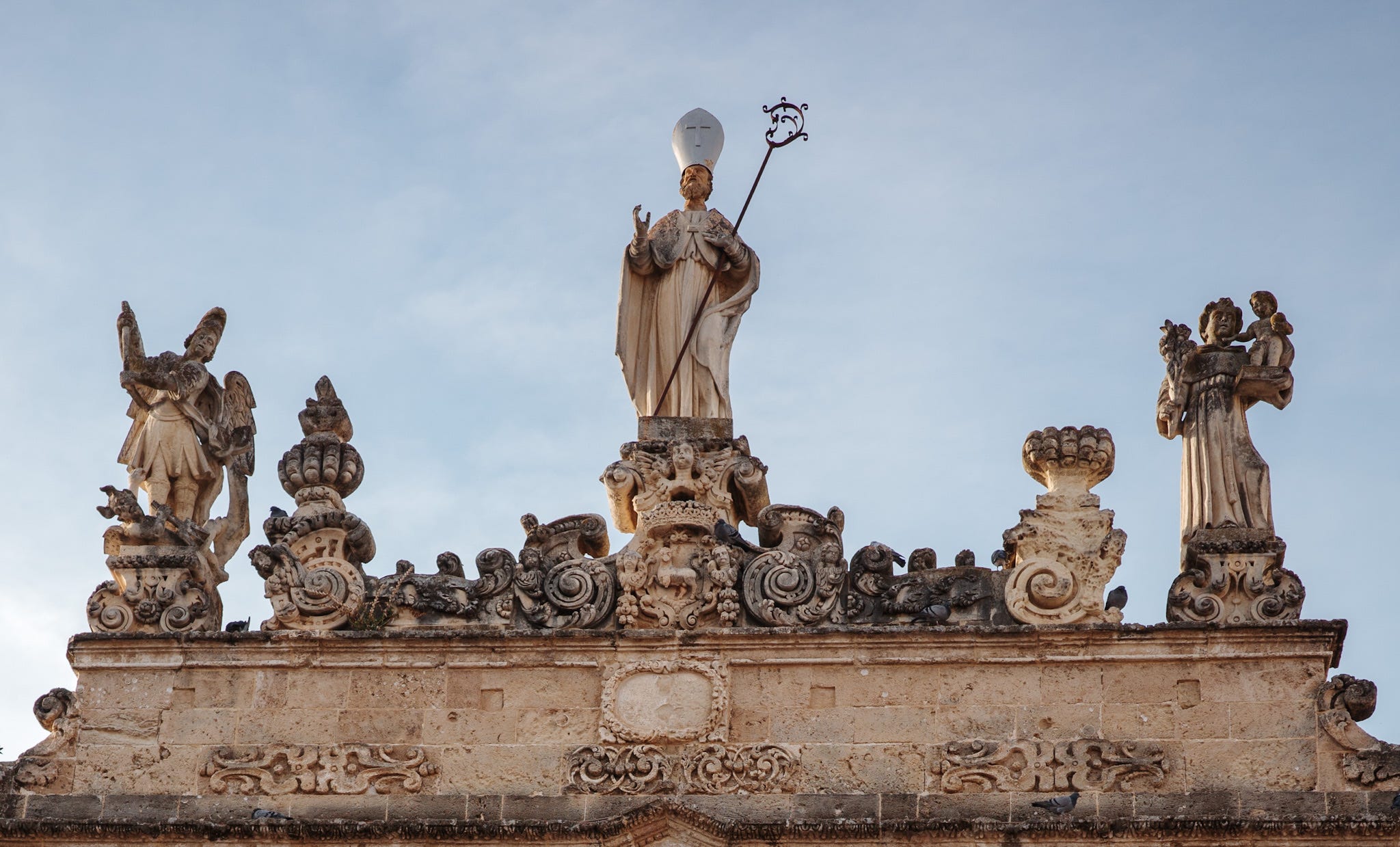
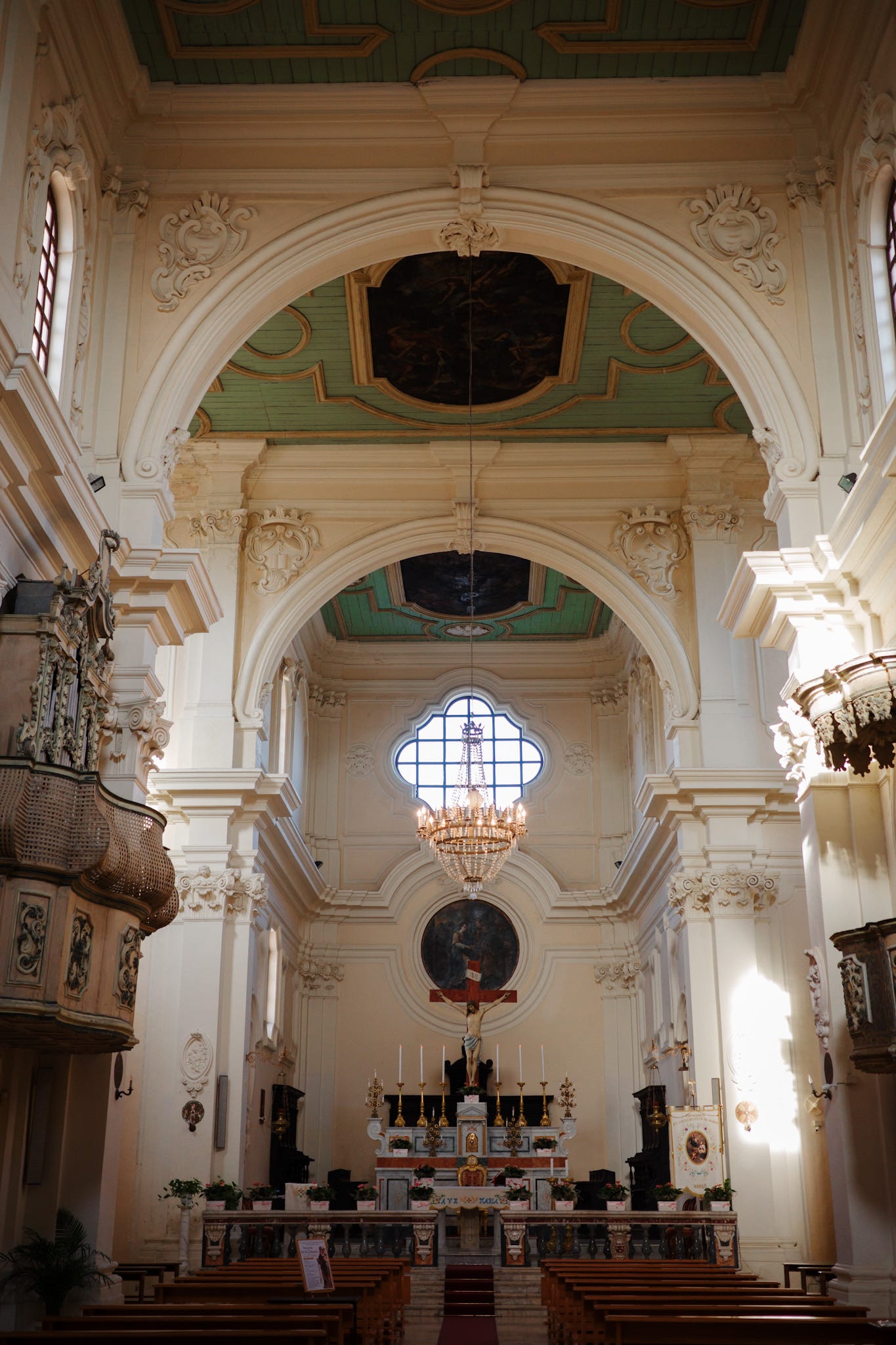
In 1055, the Normans captured Nardò. They built the cathedral that still stands today on the remains of an even older church. Daniel and I decide to take a look right away. I admire the frescoes dating from as far back as the high and late Middle Ages. The façade and altar, however, are definitely Baroque.


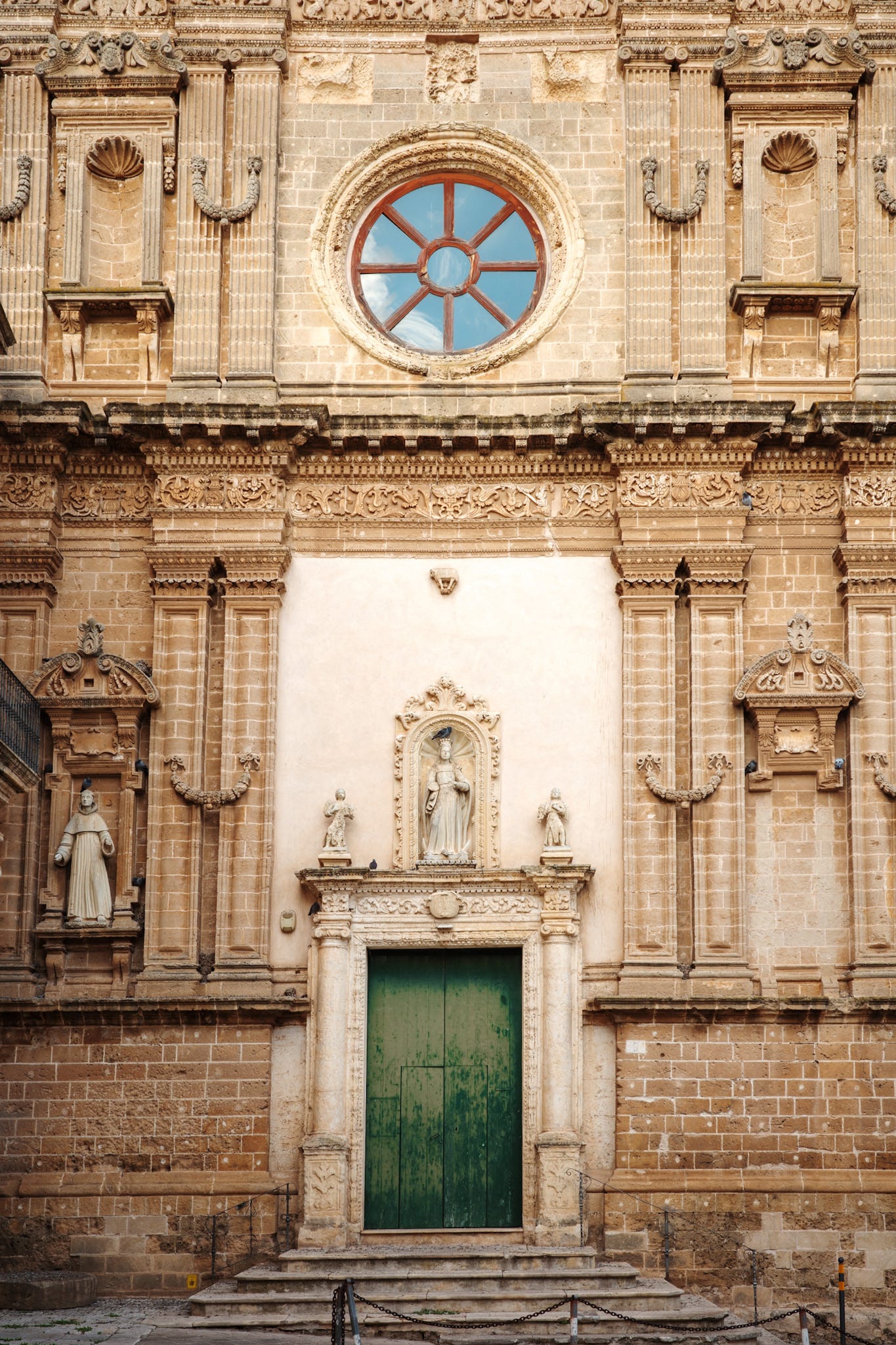
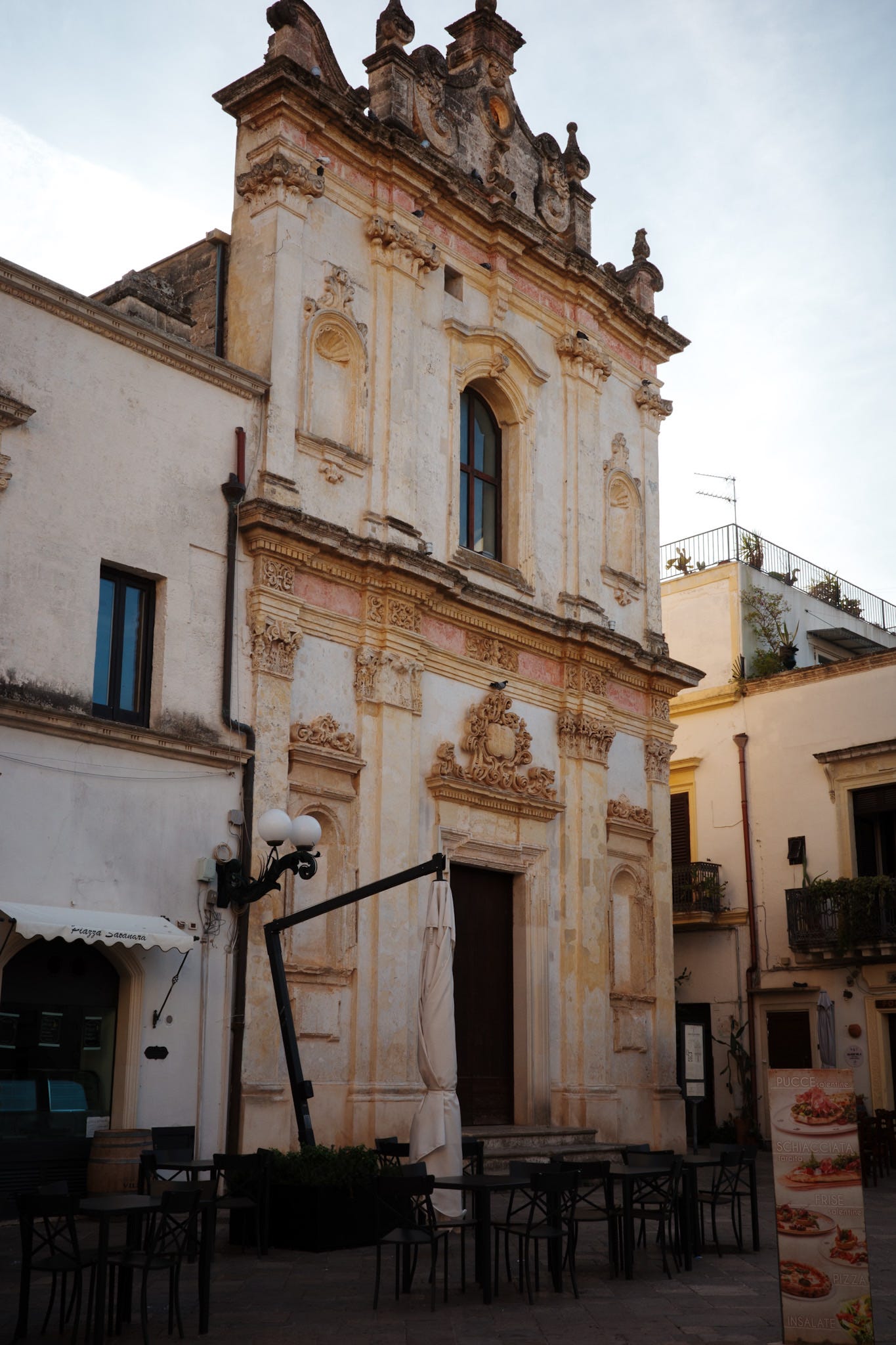
There is no shortage of churches in Nardò. I honestly cannot keep them apart. I go in when I see an open door, walk around, contemplate, capture, and leave through another door, taking with me a sense of wonder at the depths of my Catholic roots.
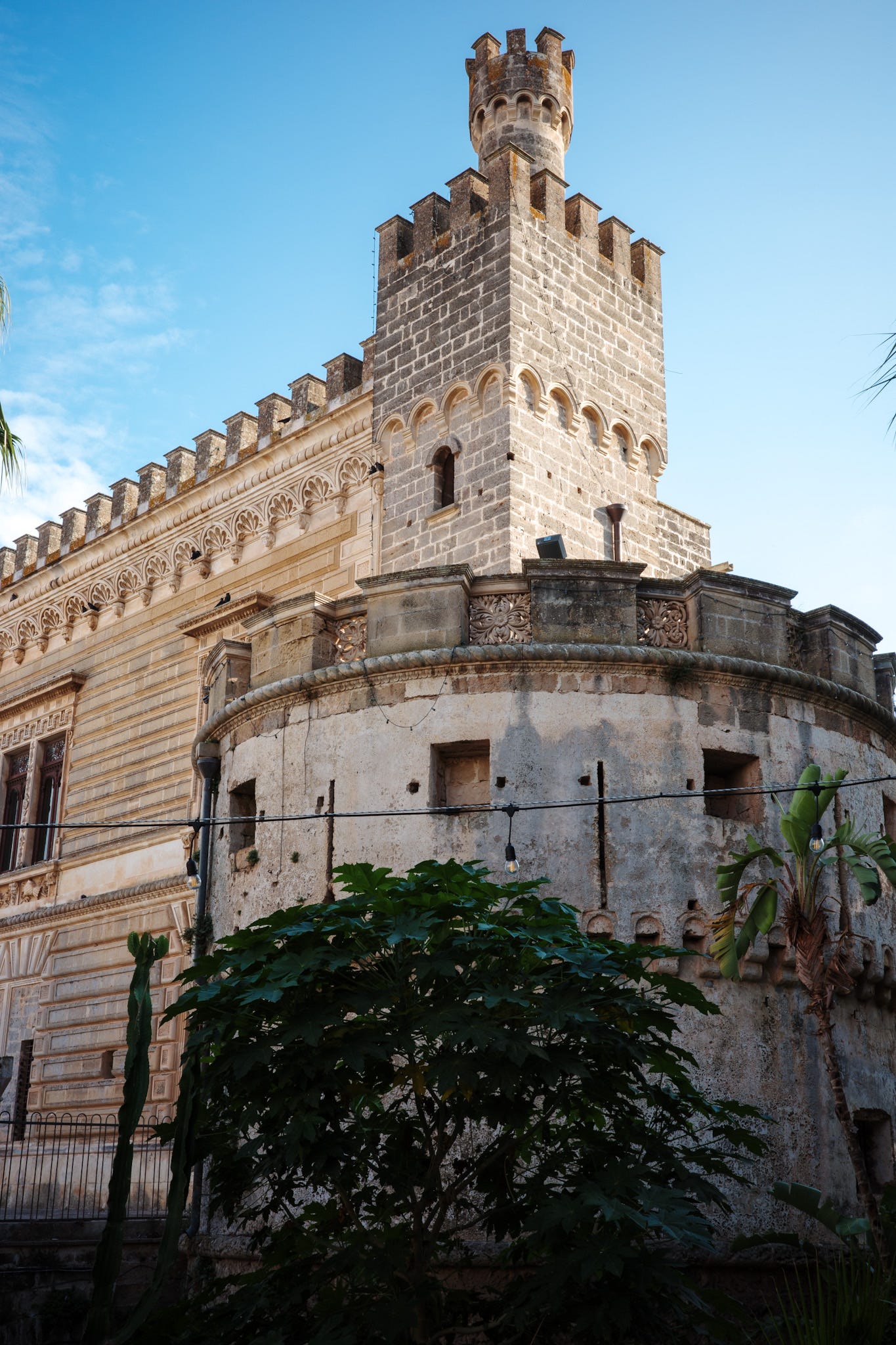
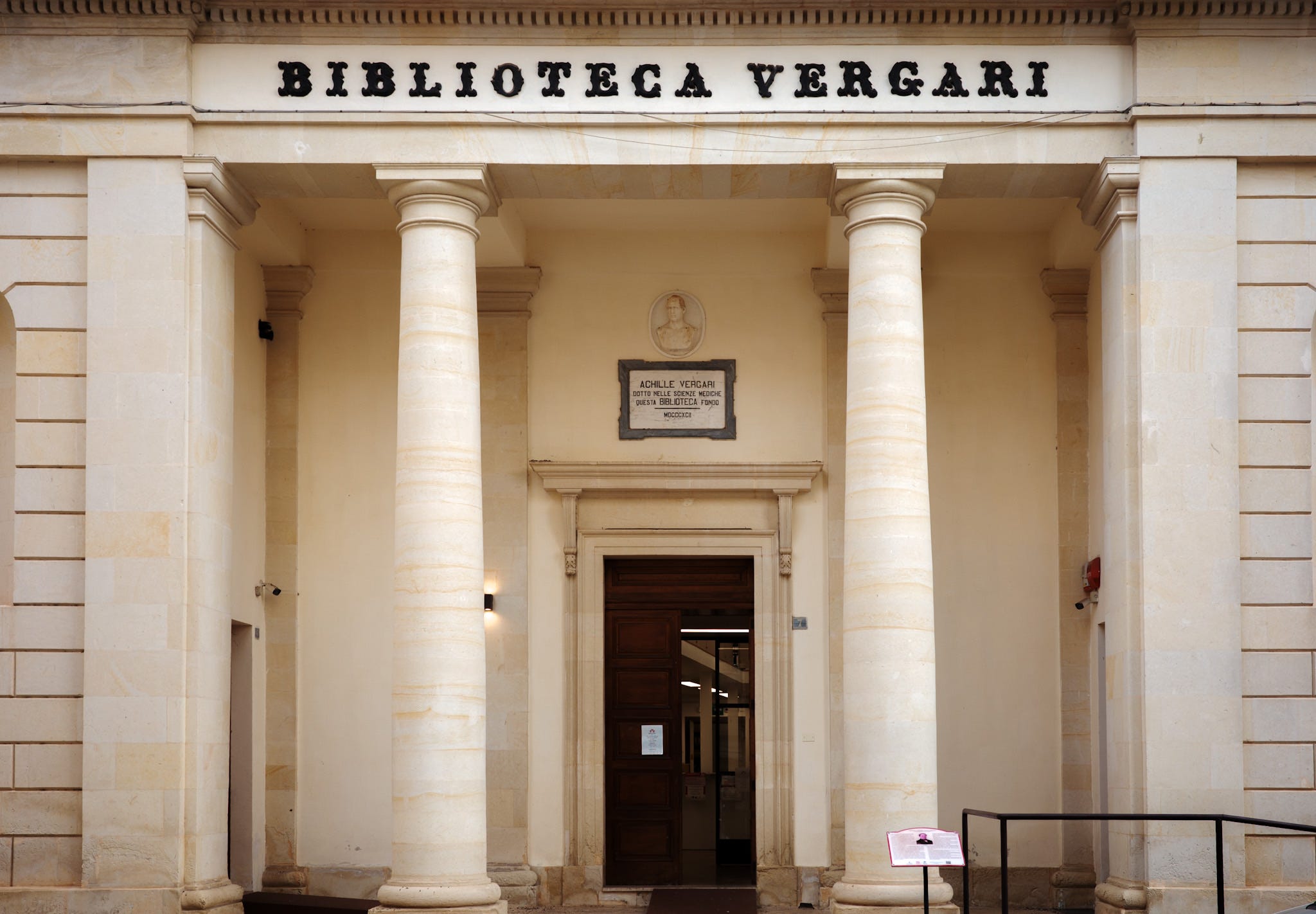
The time of the Dukes began in 1497 when Nardò became a fiefdom of the Acquaviva family. They built themselves a castle and turned the town into a cultural hotspot. Academies and literary institutes flourished, so much so that Nardò was called the New Athens. Even now, the old town has an impressive public library.
Daniel and I take a break in the botanical garden, just next to the castle. Mosquitoes are after me, they always are, but I’ve come prepared. Icaridin spray always works.
Our history lesson continues with Nardò’s decline, set in motion by a devastating earthquake in 1743. The disaster killed 150 people in Nardò alone and damaged most of its churches and palazzos.
Under the guidance of bishop Sanfelice, the people rebirthed their town into the baroque jewel whose faded glory we meet today, but the town never truly recovered. The dukes lost interest around the time that the feudal system, which had enriched the rulers, came to an end. Nardò became a town surrounded by fertile farms that no longer paid for its cultural center.
As the day draws to a close under a low honeyed sun, movement returns to Nardò’s streets. Shutters are raised. Bakeries and bars open their doors. People come out of their houses to drink a spritz, indulge in gelato, or smoke a cigarette on the marble steps of an abandoned home. Old men gather on benches and talk, gesticulating like they’re conducting a small orchestra.
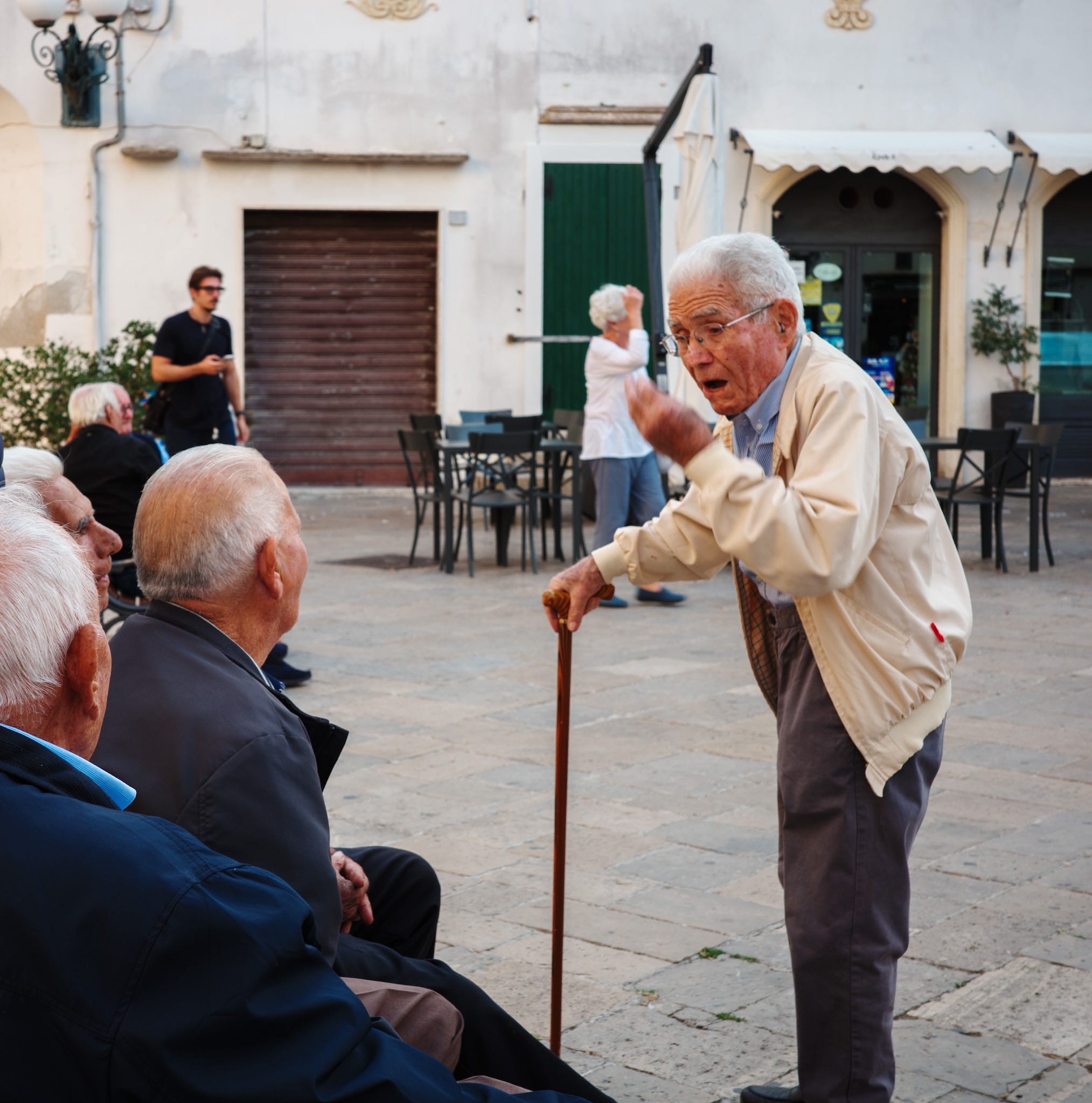
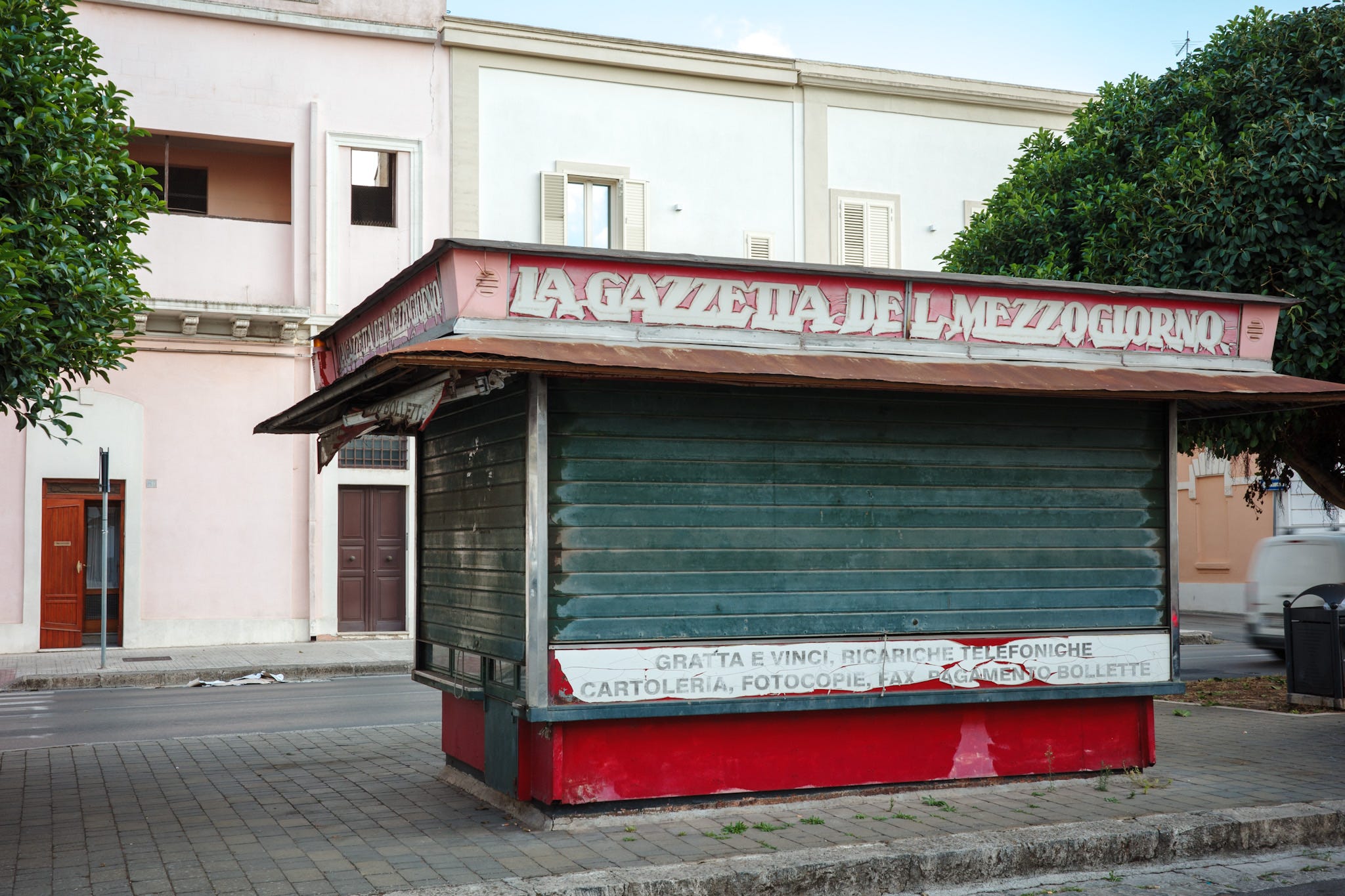
But to say that the town fills with life would be a lie. I greet the locals with an enthusiastic buonasera and receive a lackluster greeting in return. I neither sense unkindness nor curiosity. As if I’m just another stray cat or less.
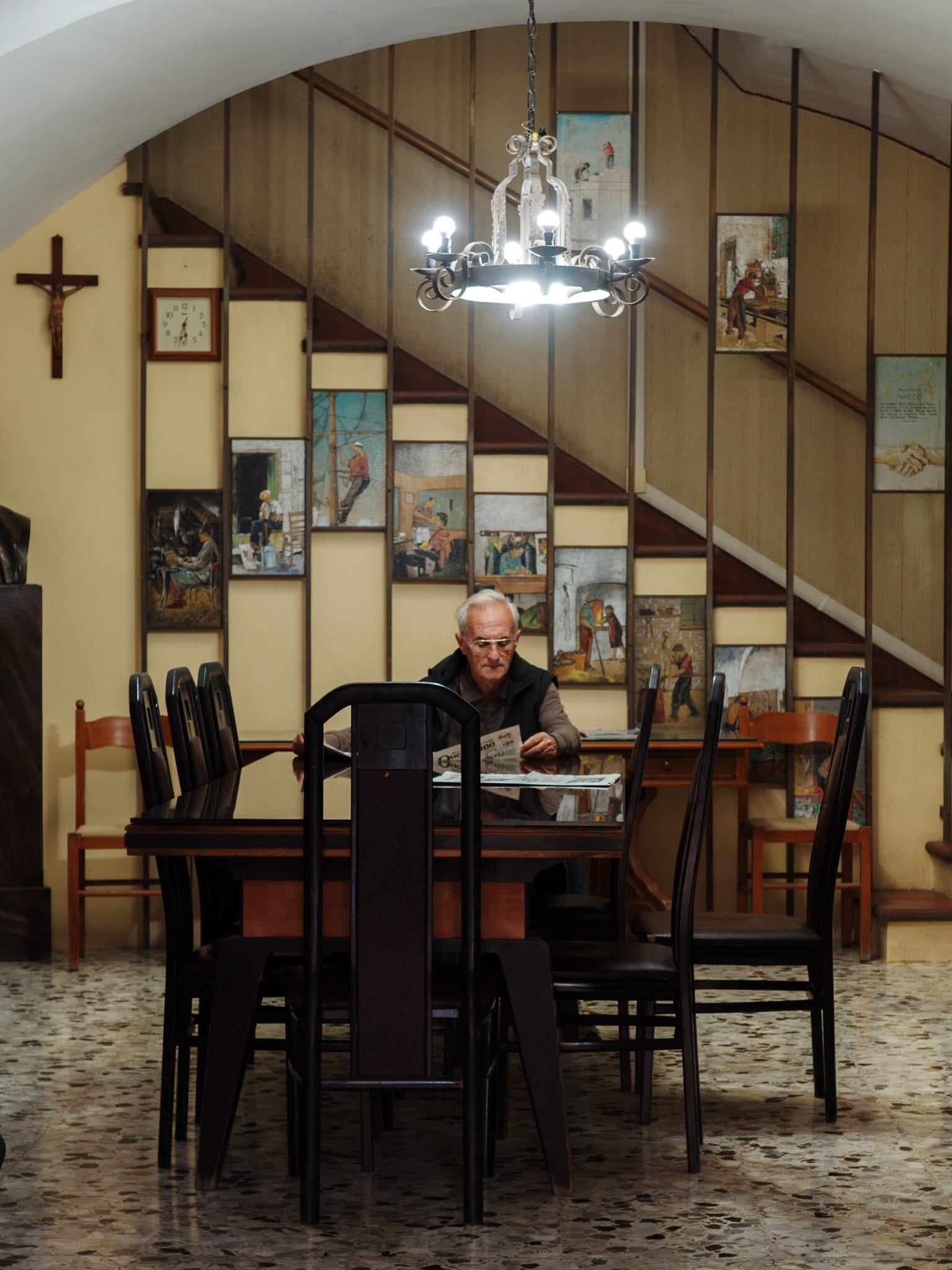
I purchase local olive oil (delicious!) and chat with the store clerk about the state of Salento’s olive groves. When Daniel and I were first in Puglia in 2019, we heard all about the Xylella bacterial epidemic that devastated the region. The Cellina di Nardò is among one of the most susceptible varieties, the clerk explains. In the span of about ten years some 21 million olive trees got infected and an unknown number of them died. The groves across Salento are now planted with more resilient varieties and are making a slow recovery. Things are looking better, at least for the trees.


On my walk home, I photograph the many for-sale signs on shop windows and walls. Who wants a piece of Nardò nowadays? Young people move to Milan and Berlin, looking for opportunities. Foreign money is welcome, but does not seem to flow. The foreigners I see appear to be like me, here now, gone tomorrow.
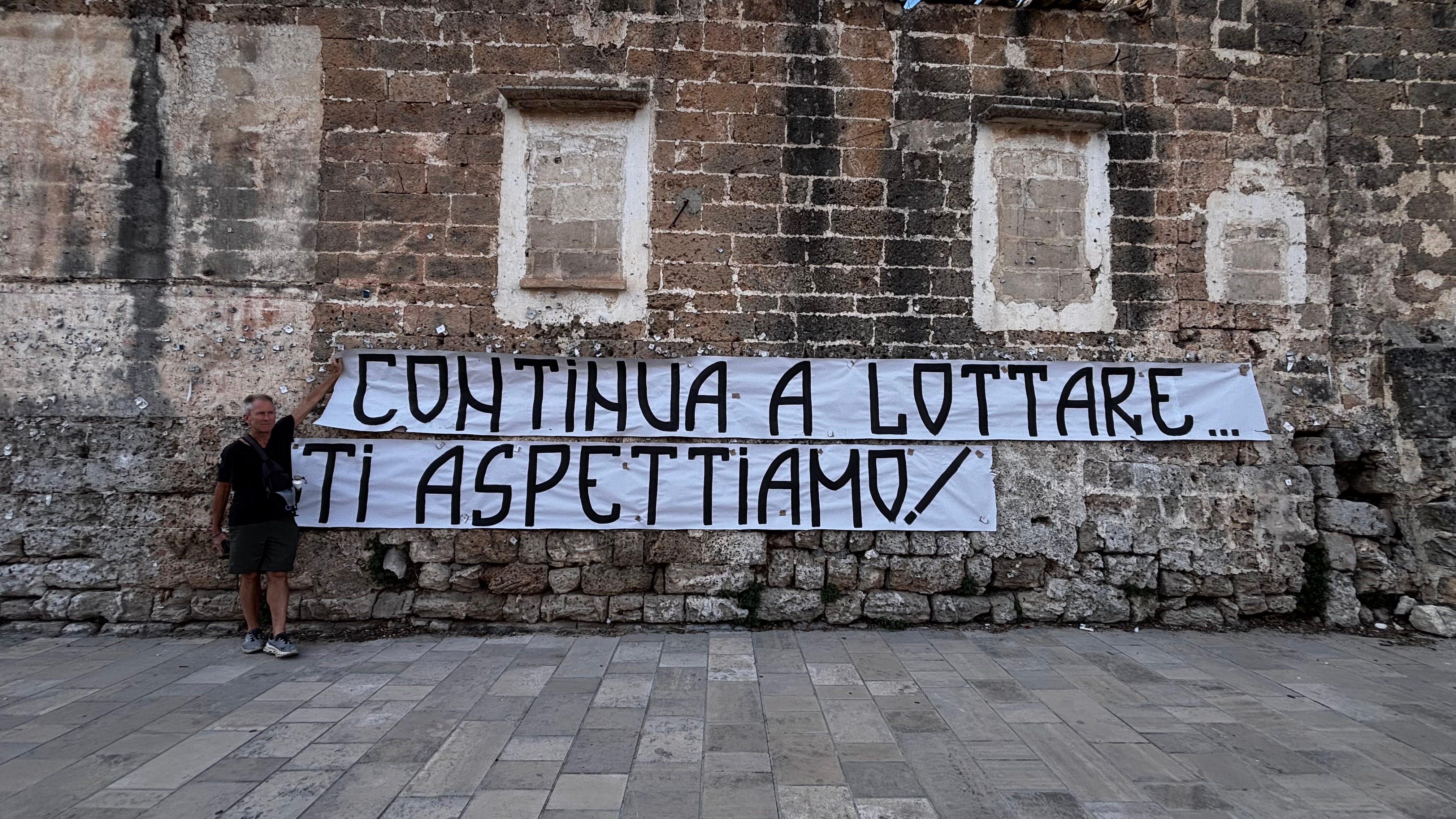
The town’s most loyal residents are the pigeons who occupy every cornice.
What does Nardò’s future hold? I see a museum without funds. I see gourmet boutiques. I see a spire wrapped in sheeting.

I’m Claire Polders, a Dutch author and nomad.
I was born in Gouda—yes from the cheese—studied philosophy, moved to Paris, married an American (in Italy), switched to writing in English, and fell in love with Japan.
The American is Daniel Presley, and most of the photos in this post are his. He shoots with a Ricoh GRIIIx and a Ricoh GRIV Monochrome.
For Wander, Wonder, Write I publish essays on my travels, life, and writing.
Find out more about my novels and stories on www.clairepolders.com.
By subscribing, sharing, commenting, and liking, you will draw more readers to my work. And I genuinely love your feedback. I’m grateful for your support.

Weekly Recommendations
I watched The Secret Agent (O Agente Secreto) this week, a historical political thriller on corruption and other mischief from Brazil, written and directed by Kleber Mendonça Filho. The movie premiered in Cannes last year and won four awards there (just not the big one). I thought it was excellent and was especially impressed by how the narrative unfolded in multiple timelines without obvious demarcations between them yet without leaving me confused.
For people with library memberships: it’s available on Kanopy!
Work with Me
I’m an editor available for quick feedback, manuscript assessments, and developmental editing. I work with authors of fiction and nonfiction writing in short forms such as flash and essays, and in book-length genres such as novels and memoirs. I can also coach authors who need help staying motivated or focused.
Please read about my professional services on my website or contact me at clairepolders@gmail.com.
Related Essays


Time to Say Goodbye
Meanwhile, things are turbulent here. Yesterday, two men appeared in front of our vacation home in Puglia demanding to speak with Daniel. All my alarm bells went off: Were they from the mafia?
The good news: They were plainclothes policemen taking Daniel in for questioning and driving us back home.
The bad news: The Netherlands issued some type of warrant on Daniel and it’s very hard to figure out why. I called the Dutch police, the Dutch immigration office, and Dutch Foreign Affairs, and they all keep referring to one another or suggest I contact the Italian immigration police (who left us with little information yesterday). We assume that Daniel’s departure from the EU in 2024 was never registered properly and that he (while physically in South America) was signaled in 2025 as an illegal immigrant. But to clear his record, I would first need to know what’s going on.
To be continued.
All my best,
Claire
P.S. There’s none today. But your comments are very welcome!
Claire! I hope your troubles with Daniel's weird immigration situation get resolved quickly.
Nardo sounds like an interesting and beautiful place. I wonder what will happen to all these old places around the world. Are they all destined to become ghost towns as the young leave and the old die? It's a sad thought, and perplexing. On the one hand, beautiful old places looking for a way to become vibrant and lived in again, and on the other, the new shiny new places with over crowding, acute housing crisis, and lack of opportunities. One perceived as purgatory, the other as nirvana.
Where is it all headed?
I would love to visit the Puglia region. Nardo is coming across as a bit bleak. I hope things get resolved quickly with the authorities.